Transcribed by David Price,best beginner friendly car track sets email [email protected] Second proofby Margaret Price.
Travels with a Donkey in the Cevennes
by Robert Louis Stevenson
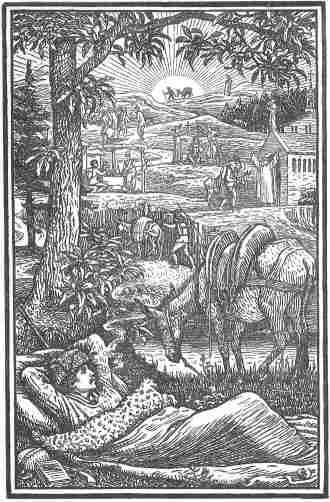
A New Impression with a Frontispiece by WalterCrane
London: Chatto & Windus, 1907
My Dear Sidney Colvin,
The journey which this little book is to describe was very agreeableand fortunate for me. After an uncouth beginning, I had the bestof luck to the end. But we are all travellers in what John Bunyancalls the wilderness of this world—all, too, travellers with adonkey: and the best that we find in our travels is an honest friend. He is a fortunate voyager who finds many. We travel, indeed, tofind them. They are the end and the reward of life. Theykeep us worthy of ourselves; and when we are alone, we are only nearerto the absent.
Every book is, in an intimate sense, a circular letter to the friendsof him who writes it. They alone take his meaning; they find privatemessages, assurances of love, and expressions of gratitude, droppedfor them in every corner. The public is but a generous patronwho defrays the postage. Yet though the letter is directed toall, we have an old and kindly custom of addressing it on the outsideto one. Of what shall a man be proud, if he is not proud of hisfriends? And so, my dear Sidney Colvin, it is with pride thatI sign myself affectionately yours,
R. L. S.
VELAY
Many are the mighty things, and nought is more mightythan man. . . . He masters by his devices the tenant of the fields.
SOPHOCLES.
Who hath loosed the bands of the wild ass?
JOB.
THE DONKEY, THE PACK, AND THE PACK-SADDLE
In a little place called Le Monastier, in a pleasant highland valleyfifteen miles from Le Puy, I spent about a month of fine days. Monastier is notable for the making of lace, for drunkenness, for freedomof language, and for unparalleled political dissension. Thereare adherents of each of the four French parties—Legitimists,Orleanists, Imperialists, and Republicans—in this little mountain-town;and they all hate, loathe, decry, and calumniate each other. Exceptfor business purposes, or to give each other the lie in a tavern brawl,they have laid aside even the civility of speech. ’Tis amere mountain Poland. In the midst of this Babylon I found myselfa rallying-point; every one was anxious to be kind and helpful to thestranger. This was not merely from the natural hospitality ofmountain people, nor even from the surprise with which I was regardedas a man living of his own free will in Le Monastier, when he mightjust as well have lived anywhere else in this big world; it arose agood deal from my projected excursion southward through the Cevennes. A traveller of my sort was a thing hitherto unheard of in that district. I was looked upon with contempt, like a man who should project a journeyto the moon, but yet with a respectful interest, like one setting forthfor the inclement Pole. All were ready to help in my preparations;a crowd of sympathisers supported me at the critical moment of a bargain;not a step was taken but was heralded by glasses round and celebratedby a dinner or a breakfast.
It was already hard upon October before I was ready to set forth,and at the high altitudes over which my road lay there was no Indiansummer to be looked for. I was determined, if not to camp out,at least to have the means of camping out in my possession; for thereis nothing more harassing to an easy mind than the necessity of reachingshelter by dusk, and the hospitality of a village inn is not alwaysto be reckoned sure by those who trudge on foot. A tent, aboveall for a solitary traveller, is troublesome to pitch, and troublesometo strike again; and even on the march it forms a conspicuous featurein your baggage. A sleeping-sack, on the other hand, is alwaysready—you have only to get into it; it serves a double purpose—abed by night, a portmanteau by day; and it does not advertise your intentionof camping out to every curious passer-by. This is a huge point. If a camp is not secret, it is but a troubled resting-place; you becomea public character; the convivial rustic visits your bedside after anearly supper; and you must sleep with one eye open, and be up beforethe day. I decided on a sleeping-sack; and after repeated visitsto Le Puy, and a deal of high living for myself and my advisers, a sleeping-sackwas designed, constructed, and triumphantly brought home.
This child of my invention was nearly six feet square, exclusiveof two triangular flaps to serve as a pillow by night and as the topand bottom of the sack by day. I call it ‘the sack,’but it was never a sack by more than courtesy: only a sort of long rollor sausage, green waterproof cart-cloth without and blue sheep’sfur within. It was commodious as a valise, warm and dry for abed. There was luxurious turning room for one; and at a pinchthe thing might serve for two. I could bury myself in it up tothe neck; for my head I trusted to a fur cap, with a hood to fold downover my ears and a band to pass under my nose like a respirator; andin case of heavy rain I proposed to make myself a little tent, or tentlet,with my waterproof coat, three stones, and a bent branch.
It will readily be conceived that I could not carry this huge packageon my own, merely human, shoulders. It remained to choose a beastof burden. Now, a horse is a fine lady among animals, flighty,timid, delicate in eating, of tender health; he is too valuable andtoo restive to be left alone, so that you are chained to your bruteas to a fellow galley-slave; a dangerous road puts him out of his wits;in short, he’s an uncertain and exacting ally, and adds thirty-foldto the troubles of the voyager. What I required was somethingcheap and small and hardy, and of a stolid and peaceful temper; andall these requisites pointed to a donkey.
There dwelt an old man in Monastier, of rather unsound intellectaccording to some, much followed by street-boys, and known to fame asFather Adam. Father Adam had a cart, and to draw the cart a diminutiveshe-ass, not much bigger than a dog, the colour of a mouse, with a kindlyeye and a determined under-jaw. There was something neat and high-bred,a quakerish elegance, about the rogue that hit my fancy on the spot. Our first interview was in Monastier market-place. To prove hergood temper, one child after another was set upon her back to ride,and one after another went head over heels into the air; until a wantof confidence began to reign in youthful bosoms, and the experimentwas discontinued from a dearth of subjects. I was already backedby a deputation of my friends; but as if this were not enough, all thebuyers and sellers came round and helped me in the bargain; and theass and I and Father Adam were the centre of a hubbub for near halfan hour. At length she passed into my service for the considerationof sixty-five francs and a glass of brandy. The sack had alreadycost eighty francs and two glasses of beer; so that Modestine, as Iinstantly baptized her, was upon all accounts the cheaper article. Indeed, that was as it should be; for she was only an appurtenance ofmy mattress, or self-acting bedstead on four castors.
I had a last interview with Father Adam in a billiard-room at thewitching hour of dawn, when I administered the brandy. He professedhimself greatly touched by the separation, and declared he had oftenbought white bread for the donkey when he had been content with blackbread for himself; but this, according to the best authorities, musthave been a flight of fancy. He had a name in the village forbrutally misusing the ass; yet it is certain that he shed a tear, andthe tear made a clean mark down one cheek.
By the advice of a fallacious local saddler, a leather pad was madefor me with rings to fasten on my bundle; and I thoughtfully completedmy kit and arranged my toilette. By way of armoury and utensils,I took a revolver, a little spirit-lamp and pan, a lantern and somehalfpenny candles, a jack-knife and a large leather flask. Themain cargo consisted of two entire changes of warm clothing—besidesmy travelling wear of country velveteen, pilot-coat, and knitted spencer—somebooks, and my railway-rug, which, being also in the form of a bag, mademe a double castle for cold nights. The permanent larder was representedby cakes of chocolate and tins of Bologna sausage. All this, exceptwhat I carried about my person, was easily stowed into the sheepskinbag; and by good fortune I threw in my empty knapsack, rather for convenienceof carriage than from any thought that I should want it on my journey. For more immediate needs I took a leg of cold mutton, a bottle of Beaujolais,an empty bottle to carry milk, an egg-beater, and a considerable quantityof black bread and white, like Father Adam, for myself and donkey, onlyin my scheme of things the destinations were reversed.
Monastrians, of all shades of thought in politics, had agreed inthreatening me with many ludicrous misadventures, and with sudden deathin many surprising forms. Cold, wolves, robbers, above all thenocturnal practical joker, were daily and eloquently forced on my attention. Yet in these vaticinations, the true, patent danger was left out. Like Christian, it was from my pack I suffered by the way. Beforetelling my own mishaps, let me in two words relate the lesson of myexperience. If the pack is well strapped at the ends, and hungat full length—not doubled, for your life—across the pack-saddle,the traveller is safe. The saddle will certainly not fit, suchis the imperfection of our transitory life; it will assuredly toppleand tend to overset; but there are stones on every roadside, and a mansoon learns the art of correcting any tendency to overbalance with awell-adjusted stone.
On the day of my departure I was up a little after five; by six,we began to load the donkey; and ten minutes after, my hopes were inthe dust. The pad would not stay on Modestine’s back forhalf a moment. I returned it to its maker, with whom I had socontumelious a passage that the street outside was crowded from wallto wall with gossips looking on and listening. The pad changedhands with much vivacity; perhaps it would be more descriptive to saythat we threw it at each other’s heads; and, at any rate, we werevery warm and unfriendly, and spoke with a deal of freedom.
I had a common donkey pack-saddle—a barde, as they callit—fitted upon Modestine; and once more loaded her with my effects. The doubled sack, my pilot-coat (for it was warm, and I was to walkin my waistcoat), a great bar of black bread, and an open basket containingthe white bread, the mutton, and the bottles, were all corded togetherin a very elaborate system of knots, and I looked on the result withfatuous content. In such a monstrous deck-cargo, all poised abovethe donkey’s shoulders, with nothing below to balance, on a brand-newpack-saddle that had not yet been worn to fit the animal, and fastenedwith brand-new girths that might be expected to stretch and slackenby the way, even a very careless traveller should have seen disasterbrewing. That elaborate system of knots, again, was the work oftoo many sympathisers to be very artfully designed. It is truethey tightened the cords with a will; as many as three at a time wouldhave a foot against Modestine’s quarters, and be hauling withclenched teeth; but I learned afterwards that one thoughtful person,without any exercise of force, can make a more solid job than half-a-dozenheated and enthusiastic grooms. I was then but a novice; evenafter the misadventure of the pad nothing could disturb my security,and I went forth from the stable door as an ox goeth to the slaughter.
THE GREEN DONKEY-DRIVER
The bell of Monastier was just striking nine as I got quit of thesepreliminary troubles and descended the hill through the common. As long as I was within sight of the windows, a secret shame and thefear of some laughable defeat withheld me from tampering with Modestine. She tripped along upon her four small hoofs with a sober daintinessof gait; from time to time she shook her ears or her tail; and she lookedso small under the bundle that my mind misgave me. We got acrossthe ford without difficulty—there was no doubt about the matter,she was docility itself—and once on the other bank, where theroad begins to mount through pine-woods, I took in my right hand theunhallowed staff, and with a quaking spirit applied it to the donkey. Modestine brisked up her pace for perhaps three steps, and then relapsedinto her former minuet. Another application had the same effect,and so with the third. I am worthy the name of an Englishman,and it goes against my conscience to lay my hand rudely on a female. I desisted, and looked her all over from head to foot; the poor brute’sknees were trembling and her breathing was distressed; it was plainthat she could go no faster on a hill. God forbid, thought I,that I should brutalise this innocent creature; let her go at her ownpace, and let me patiently follow.
What that pace was, there is no word mean enough to describe; itwas something as much slower than a walk as a walk is slower than arun; it kept me hanging on each foot for an incredible length of time;in five minutes it exhausted the spirit and set up a fever in all themuscles of the leg. And yet I had to keep close at hand and measuremy advance exactly upon hers; for if I dropped a few yards into therear, or went on a few yards ahead, Modestine came instantly to a haltand began to browse. The thought that this was to last from hereto Alais nearly broke my heart. Of all conceivable journeys, thispromised to be the most tedious. I tried to tell myself it wasa lovely day; I tried to charm my foreboding spirit with tobacco; butI had a vision ever present to me of the long, long roads, up hill anddown dale, and a pair of figures ever infinitesimally moving, foot byfoot, a yard to the minute, and, like things enchanted in a nightmare,approaching no nearer to the goal.
In the meantime there came up behind us a tall peasant, perhaps fortyyears of age, of an ironical snuffy countenance, and arrayed in thegreen tail-coat of the country. He overtook us hand over hand,and stopped to consider our pitiful advance.
‘Your donkey,’ says he, ‘is very old?’
I told him, I believed not.
Then, he supposed, we had come far.
I told him, we had but newly left Monastier.
‘Et vous marchez commeça!’ criedhe; and, throwing back his head, he laughed long and heartily. I watched him, half prepared to feel offended, until he had satisfiedhis mirth; and then, ‘You must have no pity on these animals,’said he; and, plucking a switch out of a thicket, he began to lace Modestineabout the stern-works, uttering a cry. The rogue pricked up herears and broke into a good round pace, which she kept up without flagging,and without exhibiting the least symptom of distress, as long as thepeasant kept beside us. Her former panting and shaking had been,I regret to say, a piece of comedy.
Mydeus ex machinâ, before he left me, supplied someexcellent, if inhumane, advice; presented me with the switch, whichhe declared she would feel more tenderly than my cane; and finally taughtme the true cry or masonic word of donkey-drivers, ‘Proot!’ All the time, he regarded me with a comical, incredulous air, whichwas embarrassing to confront; and smiled over my donkey-driving, asI might have smiled over his orthography, or his green tail-coat. But it was not my turn for the moment.
I was proud of my new lore, and thought I had learned the art toperfection. And certainly Modestine did wonders for the rest ofthe fore-noon, and I had a breathing space to look about me. Itwas Sabbath; the mountain-fields were all vacant in the sunshine; andas we came down through St. Martin de Frugères, the church wascrowded to the door, there were people kneeling without upon the steps,and the sound of the priest’s chanting came forth out of the diminterior. It gave me a home feeling on the spot; for I am a countrymanof the Sabbath, so to speak, and all Sabbath observances, like a Scottishaccent, strike in me mixed feelings, grateful and the reverse. It is only a traveller, hurrying by like a person from another planet,who can rightly enjoy the peace and beauty of the great ascetic feast. The sight of the resting country does his spirit good. There issomething better than music in the wide unusual silence; and it disposeshim to amiable thoughts, like the sound of a little river or the warmthof sunlight.
In this pleasant humour I came down the hill to where Goudet standsin a green end of a valley, with Château Beaufort opposite upona rocky steep, and the stream, as clear as crystal, lying in a deeppool between them. Above and below, you may hear it wimpling overthe stones, an amiable stripling of a river, which it seems absurd tocall the Loire. On all sides, Goudet is shut in by mountains;rocky footpaths, practicable at best for donkeys, join it to the outerworld of France; and the men and women drink and swear, in their greencorner, or look up at the snow-clad peaks in winter from the thresholdof their homes, in an isolation, you would think, like that of Homer’sCyclops. But it is not so; the postman reaches Goudet with theletter-bag; the aspiring youth of Goudet are within a day’s walkof the railway at Le Puy; and here in the inn you may find an engravedportrait of the host’s nephew, Régis Senac, ‘Professorof Fencing and Champion of the two Americas,’ a distinction gainedby him, along with the sum of five hundred dollars, at Tammany Hall,New York, on the 10th April 1876.
I hurried over my midday meal, and was early forth again. But,alas, as we climbed the interminable hill upon the other side, ‘Proot!’seemed to have lost its virtue. I prooted like a lion, I prootedmellifluously like a sucking-dove; but Modestine would be neither softenednor intimidated. She held doggedly to her pace; nothing but ablow would move her, and that only for a second. I must followat her heels, incessantly belabouring. A moment’s pausein this ignoble toil, and she relapsed into her own private gait. I think I never heard of any one in as mean a situation. I mustreach the lake of Bouchet, where I meant to camp, before sundown, and,to have even a hope of this, I must instantly maltreat this uncomplaininganimal. The sound of my own blows sickened me. Once, whenI looked at her, she had a faint resemblance to a lady of my acquaintancewho formerly loaded me with kindness; and this increased my horror ofmy cruelty.
To make matters worse, we encountered another donkey, ranging atwill upon the roadside; and this other donkey chanced to be a gentleman. He and Modestine met nickering for joy, and I had to separate the pairand beat down their young romance with a renewed and feverish bastinado. If the other donkey had had the heart of a male under his hide, he wouldhave fallen upon me tooth and hoof; and this was a kind of consolation—hewas plainly unworthy of Modestine’s affection. But the incidentsaddened me, as did everything that spoke of my donkey’s sex.
It was blazing hot up the valley, windless, with vehement sun uponmy shoulders; and I had to labour so consistently with my stick thatthe sweat ran into my eyes. Every five minutes, too, the pack,the basket, and the pilot-coat would take an ugly slew to one side orthe other; and I had to stop Modestine, just when I had got her to atolerable pace of about two miles an hour, to tug, push, shoulder, andreadjust the load. And at last, in the village of Ussel, saddleand all, the whole hypothec turned round and grovelled in the dust belowthe donkey’s belly. She, none better pleased, incontinentlydrew up and seemed to smile; and a party of one man, two women, andtwo children came up, and, standing round me in a half-circle, encouragedher by their example.
I had the devil’s own trouble to get the thing righted; andthe instant I had done so, without hesitation, it toppled and fell downupon the other side. Judge if I was hot! And yet not a handwas offered to assist me. The man, indeed, told me I ought tohave a package of a different shape. I suggested, if he knew nothingbetter to the point in my predicament, he might hold his tongue. And the good-natured dog agreed with me smilingly. It was themost despicable fix. I must plainly content myself with the packfor Modestine, and take the following items for my own share of theportage: a cane, a quart-flask, a pilot-jacket heavily weighted in thepockets, two pounds of black bread, and an open basket full of meatsand bottles. I believe I may say I am not devoid of greatnessof soul; for I did not recoil from this infamous burden. I disposedit, Heaven knows how, so as to be mildly portable, and then proceededto steer Modestine through the village. She tried, as was indeedher invariable habit, to enter every house and every courtyard in thewhole length; and, encumbered as I was, without a hand to help myself,no words can render an idea of my difficulties. A priest, withsix or seven others, was examining a church in process of repair, andhe and his acolytes laughed loudly as they saw my plight.
I remembered having laughed myself when I had seen good men strugglingwith adversity in the person of a jackass, and the recollection filledme with penitence. That was in my old light days, before thistrouble came upon me. God knows at least that I shall never laughagain, thought I. But oh, what a cruel thing is a farce to thoseengaged in it!
A little out of the village, Modestine, filled with the demon, sether heart upon a by-road, and positively refused to leave it. I dropped all my bundles, and, I am ashamed to say, struck the poorsinner twice across the face. It was pitiful to see her lift herhead with shut eyes, as if waiting for another blow. I came verynear crying; but I did a wiser thing than that, and sat squarely downby the roadside to consider my situation under the cheerful influenceof tobacco and a nip of brandy. Modestine, in the meanwhile, munchedsome black bread with a contrite hypocritical air. It was plainthat I must make a sacrifice to the gods of shipwreck. I threwaway the empty bottle destined to carry milk; I threw away my own whitebread, and, disdaining to act by general average, kept the black breadfor Modestine; lastly, I threw away the cold leg of mutton and the egg-whisk,although this last was dear to my heart. Thus I found room foreverything in the basket, and even stowed the boating-coat on the top. By means of an end of cord I slung it under one arm; and although thecord cut my shoulder, and the jacket hung almost to the ground, it waswith a heart greatly lightened that I set forth again.
I had now an arm free to thrash Modestine, and cruelly I chastisedher. If I were to reach the lakeside before dark, she must bestirher little shanks to some tune. Already the sun had gone downinto a windy-looking mist; and although there were still a few streaksof gold far off to the east on the hills and the black fir-woods, allwas cold and grey about our onward path. An infinity of littlecountry by-roads led hither and thither among the fields. It wasthe most pointless labyrinth. I could see my destination overhead,or rather the peak that dominates it; but choose as I pleased, the roadsalways ended by turning away from it, and sneaking back towards thevalley, or northward along the margin of the hills. The failinglight, the waning colour, the naked, unhomely, stony country throughwhich I was travelling, threw me into some despondency. I promiseyou, the stick was not idle; I think every decent step that Modestinetook must have cost me at least two emphatic blows. There wasnot another sound in the neighbourhood but that of my unwearying bastinado.
Suddenly, in the midst of my toils, the load once more bit the dust,and, as by enchantment, all the cords were simultaneously loosened,and the road scattered with my dear possessions. The packing wasto begin again from the beginning; and as I had to invent a new andbetter system, I do not doubt but I lost half an hour. It beganto be dusk in earnest as I reached a wilderness of turf and stones. It had the air of being a road which should lead everywhere at the sametime; and I was falling into something not unlike despair when I sawtwo figures stalking towards me over the stones. They walked onebehind the other like tramps, but their pace was remarkable. Theson led the way, a tall, ill-made, sombre, Scottish-looking man; themother followed, all in her Sunday’s best, with an elegantly embroideredribbon to her cap, and a new felt hat atop, and proffering, as she strodealong with kilted petticoats, a string of obscene and blasphemous oaths.
I hailed the son, and asked him my direction. He pointed looselywest and north-west, muttered an inaudible comment, and, without slackeninghis pace for an instant, stalked on, as he was going, right athwartmy path. The mother followed without so much as raising her head. I shouted and shouted after them, but they continued to scale the hillside,and turned a deaf ear to my outcries. At last, leaving Modestineby herself, I was constrained to run after them, hailing the while. They stopped as I drew near, the mother still cursing; and I could seeshe was a handsome, motherly, respectable-looking woman. The sononce more answered me roughly and inaudibly, and was for setting outagain. But this time I simply collared the mother, who was nearestme, and, apologising for my violence, declared that I could not letthem go until they had put me on my road. They were neither ofthem offended—rather mollified than otherwise; told me I had onlyto follow them; and then the mother asked me what I wanted by the lakeat such an hour. I replied, in the Scottish manner, by inquiringif she had far to go herself. She told me, with another oath,that she had an hour and a half’s road before her. And then,without salutation, the pair strode forward again up the hillside inthe gathering dusk.
I returned for Modestine, pushed her briskly forward, and, aftera sharp ascent of twenty minutes, reached the edge of a plateau. The view, looking back on my day’s journey, was both wild andsad. Mount Mézenc and the peaks beyond St. Julien stoodout in trenchant gloom against a cold glitter in the east; and the interveningfield of hills had fallen together into one broad wash of shadow, excepthere and there the outline of a wooded sugar-loaf in black, here andthere a white irregular patch to represent a cultivated farm, and hereand there a blot where the Loire, the Gazeille, or the Laussonne wanderedin a gorge.
Soon we were on a high-road, and surprise seized on my mind as Ibeheld a village of some magnitude close at hand; for I had been toldthat the neighbourhood of the lake was uninhabited except by trout. The road smoked in the twilight with children driving home cattle fromthe fields; and a pair of mounted stride-legged women, hat and cap andall, dashed past me at a hammering trot from the canton where they hadbeen to church and market. I asked one of the children where Iwas. At Bouchet St. Nicolas, he told me. Thither, abouta mile south of my destination, and on the other side of a respectablesummit, had these confused roads and treacherous peasantry conductedme. My shoulder was cut, so that it hurt sharply; my arm achedlike toothache from perpetual beating; I gave up the lake and my designto camp, and asked for the auberge.
I HAVE A GOAD
Theaubergeof Bouchet St. Nicolas was among the least pretentiousI have ever visited; but I saw many more of the like upon my journey. Indeed, it was typical of these French highlands. Imagine a cottageof two stories, with a bench before the door; the stable and kitchenin a suite, so that Modestine and I could hear each other dining; furnitureof the plainest, earthern floors, a single bedchamber for travellers,and that without any convenience but beds. In the kitchen cookingand eating go forward side by side, and the family sleep at night. Any one who has a fancy to wash must do so in public at the common table. The food is sometimes spare; hard fish and omelette have been my portionmore than once; the wine is of the smallest, the brandy abominable toman; and the visit of a fat sow, grouting under the table and rubbingagainst your legs, is no impossible accompaniment to dinner.
But the people of the inn, in nine cases out of ten, show themselvesfriendly and considerate. As soon as you cross the doors you ceaseto be a stranger; and although these peasantry are rude and forbiddingon the highway, they show a tincture of kind breeding when you sharetheir hearth. At Bouchet, for instance, I uncorked my bottle ofBeaujolais, and asked the host to join me. He would take but little.
‘I am an amateur of such wine, do you see?’ he said,‘and I am capable of leaving you not enough.’
In these hedge-inns the traveller is expected to eat with his ownknife; unless he ask, no other will be supplied: with a glass, a whangof bread, and an iron fork, the table is completely laid. My knifewas cordially admired by the landlord of Bouchet, and the spring filledhim with wonder.
‘I should never have guessed that,’ he said. ‘Iwould bet,’ he added, weighing it in his hand, ‘that thiscost you not less than five francs.’
When I told him it had cost me twenty, his jaw dropped.
He was a mild, handsome, sensible, friendly old man, astonishinglyignorant. His wife, who was not so pleasant in her manners, knewhow to read, although I do not suppose she ever did so. She hada share of brains and spoke with a cutting emphasis, like one who ruledthe roast.
‘My man knows nothing,’ she said, with an angry nod;‘he is like the beasts.’
And the old gentleman signified acquiescence with his head. There was no contempt on her part, and no shame on his; the facts wereaccepted loyally, and no more about the matter.
I was tightly cross-examined about my journey; and the lady understoodin a moment, and sketched out what I should put into my book when Igot home. ‘Whether people harvest or not in such or sucha place; if there were forests; studies of manners; what, for example,I and the master of the house say to you; the beauties of Nature, andall that.’ And she interrogated me with a look.
‘It is just that,’ said I.
‘You see,’ she added to her husband, ‘I understoodthat.’
They were both much interested by the story of my misadventures.
‘In the morning,’ said the husband, ‘I will makeyou something better than your cane. Such a beast as that feelsnothing; it is in the proverb—dur comme unâne;you might beat her insensible with a cudgel, and yet you would arrivenowhere.’
Something better! I little knew what he was offering.
The sleeping-room was furnished with two beds. I had one; andI will own I was a little abashed to find a young man and his wife andchild in the act of mounting into the other. This was my firstexperience of the sort; and if I am always to feel equally silly andextraneous, I pray God it be my last as well. I kept my eyes tomyself, and know nothing of the woman except that she had beautifularms, and seemed no whit embarrassed by my appearance. As a matterof fact, the situation was more trying to me than to the pair. A pair keep each other in countenance; it is the single gentleman whohas to blush. But I could not help attributing my sentiments tothe husband, and sought to conciliate his tolerance with a cup of brandyfrom my flask. He told me that he was a cooper of Alais travellingto St. Etienne in search of work, and that in his spare moments he followedthe fatal calling of a maker of matches. Me he readily enoughdivined to be a brandy merchant.
I was up first in the morning (Monday, September 23rd), and hastenedmy toilette guiltily, so as to leave a clear field for madam, the cooper’swife. I drank a bowl of milk, and set off to explore the neighbourhoodof Bouchet. It was perishing cold, a grey, windy, wintry morning;misty clouds flew fast and low; the wind piped over the naked platform;and the only speck of colour was away behind Mount Mézenc andthe eastern hills, where the sky still wore the orange of the dawn.
It was five in the morning, and four thousand feet above the sea;and I had to bury my hands in my pockets and trot. People weretrooping out to the labours of the field by twos and threes, and allturned round to stare upon the stranger. I had seen them comingback last night, I saw them going afield again; and there was the lifeof Bouchet in a nutshell.
When I came back to the inn for a bit of breakfast, the landladywas in the kitchen combing out her daughter’s hair; and I madeher my compliments upon its beauty.
‘Oh no,’ said the mother; ‘it is not so beautifulas it ought to be. Look, it is too fine.’
Thus does a wise peasantry console itself under adverse physicalcircumstances, and, by a startling democratic process, the defects ofthe majority decide the type of beauty.
‘And where,’ said I, ‘is monsieur?’
‘The master of the house is upstairs,’ she answered,‘making you a goad.’
Blessed be the man who invented goads! Blessed the innkeeperof Bouchet St. Nicolas, who introduced me to their use! This plainwand, with an eighth of an inch of pin, was indeed a sceptre when heput it in my hands. Thenceforward Modestine was my slave. A prick, and she passed the most inviting stable door. A prick,and she broke forth into a gallant little trotlet that devoured themiles. It was not a remarkable speed, when all was said; and wetook four hours to cover ten miles at the best of it. But whata heavenly change since yesterday! No more wielding of the uglycudgel; no more flailing with an aching arm; no more broadsword exercise,but a discreet and gentlemanly fence. And what although now andthen a drop of blood should appear on Modestine’s mouse-colouredwedge-like rump? I should have preferred it otherwise, indeed;but yesterday’s exploits had purged my heart of all humanity. The perverse little devil, since she would not be taken with kindness,must even go with pricking.
It was bleak and bitter cold, and, except a cavalcade of stride-leggedladies and a pair of post-runners, the road was dead solitary all theway to Pradelles. I scarce remember an incident but one. A handsome foal with a bell about his neck came charging up to us upona stretch of common, sniffed the air martially as one about to do greatdeeds, and suddenly thinking otherwise in his green young heart, putabout and galloped off as he had come, the bell tinkling in the wind. For a long while afterwards I saw his noble attitude as he drew up,and heard the note of his bell; and when I struck the high-road, thesong of the telegraph-wires seemed to continue the same music.
Pradelles stands on a hillside, high above the Allier, surroundedby rich meadows. They were cutting aftermath on all sides, whichgave the neighbourhood, this gusty autumn morning, an untimely smellof hay. On the opposite bank of the Allier the land kept mountingfor miles to the horizon: a tanned and sallow autumn landscape, withblack blots of fir-wood and white roads wandering through the hills. Over all this the clouds shed a uniform and purplish shadow, sad andsomewhat menacing, exaggerating height and distance, and throwing intostill higher relief the twisted ribbons of the highway. It wasa cheerless prospect, but one stimulating to a traveller. ForI was now upon the limit of Velay, and all that I beheld lay in anothercounty—wild Gévaudan, mountainous, uncultivated, and butrecently disforested from terror of the wolves.
Wolves, alas, like bandits, seem to flee the traveller’s advance;and you may trudge through all our comfortable Europe, and not meetwith an adventure worth the name. But here, if anywhere, a manwas on the frontiers of hope. For this was the land of the ever-memorableBEAST, the Napoleon Bonaparte of wolves. What a career was his! He lived ten months at free quarters in Gévaudan and Vivarais;he ate women and children and ‘shepherdesses celebrated for theirbeauty’; he pursued armed horsemen; he has been seen at broadnoonday chasing a post-chaise and outrider along the king’s high-road,and chaise and outrider fleeing before him at the gallop. He wasplacarded like a political offender, and ten thousand francs were offeredfor his head. And yet, when he was shot and sent to Versailles,behold! a common wolf, and even small for that. ‘ThoughI could reach from pole to pole,’ sang Alexander Pope; the LittleCorporal shook Europe; and if all wolves had been as this wolf, theywould have changed the history of man. M. Élie Berthethas made him the hero of a novel, which I have read, and do not wishto read again.
I hurried over my lunch, and was proof against the landlady’sdesire that I should visit our Lady of Pradelles, ‘who performedmany miracles, although she was of wood’; and before three-quartersof an hour I was goading Modestine down the steep descent that leadsto Langogne on the Allier. On both sides of the road, in big dustyfields, farmers were preparing for next spring. Every fifty yardsa yoke of great-necked stolid oxen were patiently haling at the plough. I saw one of these mild formidable servants of the glebe, who took asudden interest in Modestine and me. The furrow down which hewas journeying lay at an angle to the road, and his head was solidlyfixed to the yoke like those of caryatides below a ponderous cornice;but he screwed round his big honest eyes and followed us with a ruminatinglook, until his master bade him turn the plough and proceed to reascendthe field. From all these furrowing ploughshares, from the feetof oxen, from a labourer here and there who was breaking the dry clodswith a hoe, the wind carried away a thin dust like so much smoke. It was a fine, busy, breathing, rustic landscape; and as I continuedto descend, the highlands of Gévaudan kept mounting in frontof me against the sky.
I had crossed the Loire the day before; now I was to cross the Allier;so near are these two confluents in their youth. Just at the bridgeof Langogne, as the long-promised rain was beginning to fall, a lassieof some seven or eight addressed me in the sacramental phrase, ‘D’où’st-ce-quevous venez?’ She did it with so high an air that sheset me laughing; and this cut her to the quick. She was evidentlyone who reckoned on respect, and stood looking after me in silent dudgeon,as I crossed the bridge and entered the county of Gévaudan.
UPPER GÉVAUDAN
The way also here was very wearisome through dirt andslabbiness; nor was there on all this ground so much as one inn or victualling-housewherein to refresh the feebler sort.
PILGRIM’S PROGRESS.
A CAMP IN THE DARK
The next day (Tuesday, September 24th), it was two o’clockin the afternoon before I got my journal written up and my knapsackrepaired, for I was determined to carry my knapsack in the future andhave no more ado with baskets; and half an hour afterwards I set outfor Le Cheylard l’Évêque, a place on the bordersof the forest of Mercoire. A man, I was told, should walk therein an hour and a half; and I thought it scarce too ambitious to supposethat a man encumbered with a donkey might cover the same distance infour hours.
All the way up the long hill from Langogne it rained and hailed alternately;the wind kept freshening steadily, although slowly; plentiful hurryingclouds—some dragging veils of straight rain-shower, others massedand luminous as though promising snow—careered out of the northand followed me along my way. I was soon out of the cultivatedbasin of the Allier, and away from the ploughing oxen, and such-likesights of the country. Moor, heathery marsh, tracts of rock andpines, woods of birch all jewelled with the autumn yellow, here andthere a few naked cottages and bleak fields,—these were the charactersof the country. Hill and valley followed valley and hill; thelittle green and stony cattle-tracks wandered in and out of one another,split into three or four, died away in marshy hollows, and began againsporadically on hillsides or at the borders of a wood.
There was no direct road to Cheylard, and it was no easy affair tomake a passage in this uneven country and through this intermittentlabyrinth of tracks. It must have been about four when I struckSagnerousse, and went on my way rejoicing in a sure point of departure. Two hours afterwards, the dusk rapidly falling, in a lull of the wind,I issued from a fir-wood where I had long been wandering, and found,not the looked-for village, but another marish bottom among rough-and-tumblehills. For some time past I had heard the ringing of cattle-bellsahead; and now, as I came out of the skirts of the wood, I saw nearupon a dozen cows and perhaps as many more black figures, which I conjecturedto be children, although the mist had almost unrecognisably exaggeratedtheir forms. These were all silently following each other roundand round in a circle, now taking hands, now breaking up with chainsand reverences. A dance of children appeals to very innocent andlively thoughts; but, at nightfall on the marshes, the thing was eerieand fantastic to behold. Even I, who am well enough read in HerbertSpencer, felt a sort of silence fall for an instant on my mind. The next, I was pricking Modestine forward, and guiding her like anunruly ship through the open. In a path, she went doggedly aheadof her own accord, as before a fair wind; but once on the turf or amongheather, and the brute became demented. The tendency of lost travellersto go round in a circle was developed in her to the degree of passion,and it took all the steering I had in me to keep even a decently straightcourse through a single field.
While I was thus desperately tacking through the bog, children andcattle began to disperse, until only a pair of girls remained behind. From these I sought direction on my path. The peasantry in generalwere but little disposed to counsel a wayfarer. One old devilsimply retired into his house, and barricaded the door on my approach;and I might beat and shout myself hoarse, he turned a deaf ear. Another, having given me a direction which, as I found afterwards, Ihad misunderstood, complacently watched me going wrong without addinga sign. He did not care a stalk of parsley if I wandered all nightupon the hills! As for these two girls, they were a pair of impudentsly sluts, with not a thought but mischief. One put out her tongueat me, the other bade me follow the cows; and they both giggled andjogged each other’s elbows. The Beast of Gévaudanate about a hundred children of this district; I began to think of himwith sympathy.
Leaving the girls, I pushed on through the bog, and got into anotherwood and upon a well-marked road. It grew darker and darker. Modestine, suddenly beginning to smell mischief, bettered the pace ofher own accord, and from that time forward gave me no trouble. It was the first sign of intelligence I had occasion to remark in her. At the same time, the wind freshened into half a gale, and another heavydischarge of rain came flying up out of the north. At the otherside of the wood I sighted some red windows in the dusk. Thiswas the hamlet of Fouzilhic; three houses on a hillside, near a woodof birches. Here I found a delightful old man, who came a littleway with me in the rain to put me safely on the road for Cheylard. He would hear of no reward; but shook his hands above his head almostas if in menace, and refused volubly and shrilly, in unmitigated patois.
All seemed right at last. My thoughts began to turn upon dinnerand a fireside, and my heart was agreeably softened in my bosom. Alas, and I was on the brink of new and greater miseries! Suddenly,at a single swoop, the night fell. I have been abroad in manya black night, but never in a blacker. A glimmer of rocks, a glimmerof the track where it was well beaten, a certain fleecy density, ornight within night, for a tree,—this was all that I could discriminate. The sky was simply darkness overhead; even the flying clouds pursuedtheir way invisibly to human eyesight. I could not distinguishmy hand at arm’s-length from the track, nor my goad, at the samedistance, from the meadows or the sky.
Soon the road that I was following split, after the fashion of thecountry, into three or four in a piece of rocky meadow. SinceModestine had shown such a fancy for beaten roads, I tried her instinctin this predicament. But the instinct of an ass is what mightbe expected from the name; in half a minute she was clambering roundand round among some boulders, as lost a donkey as you would wish tosee. I should have camped long before had I been properly provided;but as this was to be so short a stage, I had brought no wine, no breadfor myself, and little over a pound for my lady friend. Add tothis, that I and Modestine were both handsomely wetted by the showers. But now, if I could have found some water, I should have camped at oncein spite of all. Water, however, being entirely absent, exceptin the form of rain, I determined to return to Fouzilhic, and ask aguide a little farther on my way—‘a little farther lendthy guiding hand.’
The thing was easy to decide, hard to accomplish. In this sensibleroaring blackness I was sure of nothing but the direction of the wind. To this I set my face; the road had disappeared, and I went across country,now in marshy opens, now baffled by walls unscalable to Modestine, untilI came once more in sight of some red windows. This time theywere differently disposed. It was not Fouzilhic, but Fouzilhac,a hamlet little distant from the other in space, but worlds away inthe spirit of its inhabitants. I tied Modestine to a gate, andgroped forward, stumbling among rocks, plunging mid-leg in bog, untilI gained the entrance of the village. In the first lighted housethere was a woman who would not open to me. She could do nothing,she cried to me through the door, being alone and lame; but if I wouldapply at the next house, there was a man who could help me if he hada mind.
They came to the next door in force, a man, two women, and a girl,and brought a pair of lanterns to examine the wayfarer. The manwas not ill-looking, but had a shifty smile. He leaned againstthe doorpost, and heard me state my case. All I asked was a guideas far as Cheylard.
‘C’est que, voyez-vous, il fait noir,’ saidhe.
I told him that was just my reason for requiring help.
‘I understand that,’ said he, looking uncomfortable;‘mais—c’est—de la peine.’
I was willing to pay, I said. He shook his head. I roseas high as ten francs; but he continued to shake his head. ‘Nameyour own price, then,’ said I.
‘Ce n’est pas ça,’ he said at length,and with evident difficulty; ‘but I am not going to cross thedoor—mais je ne sortirai pas de la porte.’
I grew a little warm, and asked him what he proposed that I shoulddo.
‘Where are you going beyond Cheylard?’ he asked by wayof answer.
‘That is no affair of yours,’ I returned, for I was notgoing to indulge his bestial curiosity; ‘it changes nothing inmy present predicament.’
‘C’est vrai, ça,’ he acknowledged,with a laugh; ‘oui, c’est vrai. Et d’oùvenez-vous?’
A better man than I might have felt nettled.
‘Oh,’ said I, ‘I am not going to answer any ofyour questions, so you may spare yourself the trouble of putting them. I am late enough already; I want help. If you will not guide meyourself, at least help me to find some one else who will.’
‘Hold on,’ he cried suddenly. ‘Was it notyou who passed in the meadow while it was still day?’
‘Yes, yes,’ said the girl, whom I had not hitherto recognised;‘it was monsieur; I told him to follow the cow.’
‘As for you, mademoiselle,’ said I, ‘you are afarceuse.’
‘And,’ added the man, ‘what the devil have youdone to be still here?’
What the devil, indeed! But there I was.
‘The great thing,’ said I, ‘is to make an end ofit’; and once more proposed that he should help me to find a guide.
‘C’est que,’ he said again, ‘c’estque—il fait noir.’
‘Very well,’ said I; ‘take one of your lanterns.’
‘No,’ he cried, drawing a thought backward, and againintrenching himself behind one of his former phrases; ‘I willnot cross the door.’
I looked at him. I saw unaffected terror struggling on hisface with unaffected shame; he was smiling pitifully and wetting hislip with his tongue, like a detected schoolboy. I drew a briefpicture of my state, and asked him what I was to do.
‘I don’t know,’ he said; ‘I will not crossthe door.’
Here was the Beast of Gévaudan, and no mistake.
‘Sir,’ said I, with my most commanding manners, ‘youare a coward.’
And with that I turned my back upon the family party, who hastenedto retire within their fortifications; and the famous door was closedagain, but not till I had overheard the sound of laughter. Filiabarbara pater barbarior. Let me say it in the plural: theBeasts of Gévaudan.
The lanterns had somewhat dazzled me, and I ploughed distressfullyamong stones and rubbish-heaps. All the other houses in the villagewere both dark and silent; and though I knocked at here and there adoor, my knocking was unanswered. It was a bad business; I gaveup Fouzilhac with my curses. The rain had stopped, and the wind,which still kept rising, began to dry my coat and trousers. ‘Verywell,’ thought I, ‘water or no water, I must camp.’ But the first thing was to return to Modestine. I am pretty sureI was twenty minutes groping for my lady in the dark; and if it hadnot been for the unkindly services of the bog, into which I once morestumbled, I might have still been groping for her at the dawn. My next business was to gain the shelter of a wood, for the wind wascold as well as boisterous. How, in this well-wooded district,I should have been so long in finding one, is another of the insolublemysteries of this day’s adventures; but I will take my oath thatI put near an hour to the discovery.
At last black trees began to show upon my left, and, suddenly crossingthe road, made a cave of unmitigated blackness right in front. I call it a cave without exaggeration; to pass below that arch of leaveswas like entering a dungeon. I felt about until my hand encountereda stout branch, and to this I tied Modestine, a haggard, drenched, despondingdonkey. Then I lowered my pack, laid it along the wall on themargin of the road, and unbuckled the straps. I knew well enoughwhere the lantern was; but where were the candles? I groped andgroped among the tumbled articles, and, while I was thus groping, suddenlyI touched the spirit-lamp. Salvation! This would serve myturn as well. The wind roared unwearyingly among the trees; Icould hear the boughs tossing and the leaves churning through half amile of forest; yet the scene of my encampment was not only as blackas the pit, but admirably sheltered. At the second match the wickcaught flame. The light was both livid and shifting; but it cutme off from the universe, and doubled the darkness of the surroundingnight.
I tied Modestine more conveniently for herself, and broke up halfthe black bread for her supper, reserving the other half against themorning. Then I gathered what I should want within reach, tookoff my wet boots and gaiters, which I wrapped in my waterproof, arrangedmy knapsack for a pillow under the flap of my sleeping-bag, insinuatedmy limbs into the interior, and buckled myself in like a bambino. I opened a tin of Bologna sausage and broke a cake of chocolate, andthat was all I had to eat. It may sound offensive, but I ate themtogether, bite by bite, by way of bread and meat. All I had towash down this revolting mixture was neat brandy: a revolting beveragein itself. But I was rare and hungry; ate well, and smoked oneof the best cigarettes in my experience. Then I put a stone inmy straw hat, pulled the flap of my fur cap over my neck and eyes, putmy revolver ready to my hand, and snuggled well down among the sheepskins.
I questioned at first if I were sleepy, for I felt my heart beatingfaster than usual, as if with an agreeable excitement to which my mindremained a stranger. But as soon as my eyelids touched, that subtleglue leaped between them, and they would no more come separate. The wind among the trees was my lullaby. Sometimes it soundedfor minutes together with a steady, even rush, not rising nor abating;and again it would swell and burst like a great crashing breaker, andthe trees would patter me all over with big drops from the rain of theafternoon. Night after night, in my own bedroom in the country,I have given ear to this perturbing concert of the wind among the woods;but whether it was a difference in the trees, or the lie of the ground,or because I was myself outside and in the midst of it, the fact remainsthat the wind sang to a different tune among these woods of Gévaudan. I hearkened and hearkened; and meanwhile sleep took gradual possessionof my body and subdued my thoughts and senses; but still my last wakingeffort was to listen and distinguish, and my last conscious state wasone of wonder at the foreign clamour in my ears.
Twice in the course of the dark hours—once when a stone galledme underneath the sack, and again when the poor patient Modestine, growingangry, pawed and stamped upon the road—I was recalled for a briefwhile to consciousness, and saw a star or two overhead, and the lace-likeedge of the foliage against the sky. When I awoke for the thirdtime (Wednesday, September 25th), the world was flooded with a bluelight, the mother of the dawn. I saw the leaves labouring in thewind and the ribbon of the road; and, on turning my head, there wasModestine tied to a beech, and standing half across the path in an attitudeof inimitable patience. I closed my eyes again, and set to thinkingover the experience of the night. I was surprised to find howeasy and pleasant it had been, even in this tempestuous weather. The stone which annoyed me would not have been there, had I not beenforced to camp blindfold in the opaque night; and I had felt no otherinconvenience, except when my feet encountered the lantern or the secondvolume of Peyrat’s Pastors of the Desertamong the mixedcontents of my sleeping-bag; nay, more, I had felt not a touch of cold,and awakened with unusually lightsome and clear sensations.
With that, I shook myself, got once more into my boots and gaiters,and, breaking up the rest of the bread for Modestine, strolled aboutto see in what part of the world I had awakened. Ulysses, lefton Ithaca, and with a mind unsettled by the goddess, was not more pleasantlyastray. I have been after an adventure all my life, a pure dispassionateadventure, such as befell early and heroic voyagers; and thus to befound by morning in a random woodside nook in Gévaudan—notknowing north from south, as strange to my surroundings as the firstman upon the earth, an inland castaway—was to find a fractionof my day-dreams realised. I was on the skirts of a little woodof birch, sprinkled with a few beeches; behind, it adjoined anotherwood of fir; and in front, it broke up and went down in open order intoa shallow and meadowy dale. All around there were bare hilltops,some near, some far away, as the perspective closed or opened, but noneapparently much higher than the rest. The wind huddled the trees. The golden specks of autumn in the birches tossed shiveringly. Overhead the sky was full of strings and shreds of vapour, flying, vanishing,reappearing, and turning about an axis like tumblers, as the wind houndedthem through heaven. It was wild weather and famishing cold. I ate some chocolate, swallowed a mouthful of brandy, and smoked a cigarettebefore the cold should have time to disable my fingers. And bythe time I had got all this done, and had made my pack and bound iton the pack-saddle, the day was tiptoe on the threshold of the east. We had not gone many steps along the lane, before the sun, still invisibleto me, sent a glow of gold over some cloud mountains that lay rangedalong the eastern sky.
The wind had us on the stern, and hurried us bitingly forward. I buttoned myself into my coat, and walked on in a pleasant frame ofmind with all men, when suddenly, at a corner, there was Fouzilhic oncemore in front of me. Nor only that, but there was the old gentlemanwho had escorted me so far the night before, running out of his houseat sight of me, with hands upraised in horror.
‘My poor boy!’ he cried, ‘what does this mean?’
I told him what had happened. He beat his old hands like clappersin a mill, to think how lightly he had let me go; but when he heardof the man of Fouzilhac, anger and depression seized upon his mind.
‘This time, at least,’ said he, ‘there shall beno mistake.’
And he limped along, for he was very rheumatic, for about half amile, and until I was almost within sight of Cheylard, the destinationI had hunted for so long.
CHEYLARD AND LUC
Candidly, it seemed little worthy of all this searching. Afew broken ends of village, with no particular street, but a successionof open places heaped with logs and fagots; a couple of tilted crosses,a shrine to Our Lady of all Graces on the summit of a little hill; andall this, upon a rattling highland river, in the corner of a naked valley. What went ye out for to see? thought I to myself. But the placehad a life of its own. I found a board, commemorating the liberalitiesof Cheylard for the past year, hung up, like a banner, in the diminutiveand tottering church. In 1877, it appeared, the inhabitants subscribedforty-eight francs ten centimes for the ‘Work of the Propagationof the Faith.’ Some of this, I could not help hoping, wouldbe applied to my native land. Cheylard scrapes together halfpencefor the darkened souls in Edinburgh; while Balquhidder and Dunrossnessbemoan the ignorance of Rome. Thus, to the high entertainmentof the angels, do we pelt each other with evangelists, like schoolboysbickering in the snow.
The inn was again singularly unpretentious. The whole furnitureof a not ill-to-do family was in the kitchen: the beds, the cradle,the clothes, the plate-rack, the meal-chest, and the photograph of theparish priest. There were five children, one of whom was set toits morning prayers at the stair-foot soon after my arrival, and a sixthwould ere long be forthcoming. I was kindly received by thesegood folk. They were much interested in my misadventure. The wood in which I had slept belonged to them; the man of Fouzilhacthey thought a monster of iniquity, and counselled me warmly to summonhim at law—‘because I might have died.’ Thegood wife was horror-stricken to see me drink over a pint of uncreamedmilk.
‘You will do yourself an evil,’ she said. ‘Permitme to boil it for you.’
After I had begun the morning on this delightful liquor, she havingan infinity of things to arrange, I was permitted, nay requested, tomake a bowl of chocolate for myself. My boots and gaiters werehung up to dry, and, seeing me trying to write my journal on my knee,the eldest daughter let down a hinged table in the chimney-corner formy convenience. Here I wrote, drank my chocolate, and finallyate an omelette before I left. The table was thick with dust;for, as they explained, it was not used except in winter weather. I had a clear look up the vent, through brown agglomerations of sootand blue vapour, to the sky; and whenever a handful of twigs was thrownon to the fire, my legs were scorched by the blaze.
The husband had begun life as a muleteer, and when I came to chargeModestine showed himself full of the prudence of his art. ‘Youwill have to change this package,’ said he; ‘it ought tobe in two parts, and then you might have double the weight.’
I explained that I wanted no more weight; and for no donkey hithertocreated would I cut my sleeping-bag in two.
‘It fatigues her, however,’ said the innkeeper; ‘itfatigues her greatly on the march. Look.’
Alas, there were her two forelegs no better than raw beef on theinside, and blood was running from under her tail. They told mewhen I started, and I was ready to believe it, that before a few daysI should come to love Modestine like a dog. Three days had passed,we had shared some misadventures, and my heart was still as cold asa potato towards my beast of burden. She was pretty enough tolook at; but then she had given proof of dead stupidity, redeemed indeedby patience, but aggravated by flashes of sorry and ill-judged light-heartedness. And I own this new discovery seemed another point against her. What the devil was the good of a she-ass if she could not carry a sleeping-bagand a few necessaries? I saw the end of the fable rapidly approaching,when I should have to carry Modestine. Æsop was the manto know the world! I assure you I set out with heavy thoughtsupon my short day’s march.
It was not only heavy thoughts about Modestine that weighted me uponthe way; it was a leaden business altogether. For first, the windblew so rudely that I had to hold on the pack with one hand from Cheylardto Luc; and second, my road lay through one of the most beggarly countriesin the world. It was like the worst of the Scottish Highlands,only worse; cold, naked, and ignoble, scant of wood, scant of heather,scant of life. A road and some fences broke the unvarying waste,and the line of the road was marked by upright pillars, to serve intime of snow.
Why any one should desire to visit either Luc or Cheylard is morethan my much-inventing spirit can suppose. For my part, I travelnot to go anywhere, but to go. I travel for travel’s sake. The great affair is to move; to feel the needs and hitches of our lifemore nearly; to come down off this feather-bed of civilisation, andfind the globe granite underfoot and strewn with cutting flints. Alas, as we get up in life, and are more preoccupied with our affairs,even a holiday is a thing that must be worked for. To hold a packupon a pack-saddle against a gale out of the freezing north is no highindustry, but it is one that serves to occupy and compose the mind. And when the present is so exacting, who can annoy himself about thefuture?
I came out at length above the Allier. A more unsightly prospectat this season of the year it would be hard to fancy. Shelvinghills rose round it on all sides, here dabbled with wood and fields,there rising to peaks alternately naked and hairy with pines. The colour throughout was black or ashen, and came to a point in theruins of the castle of Luc, which pricked up impudently from below myfeet, carrying on a pinnacle a tall white statue of Our Lady, which,I heard with interest, weighed fifty quintals, and was to be dedicatedon the 6th of October. Through this sorry landscape trickled theAllier and a tributary of nearly equal size, which came down to joinit through a broad nude valley in Vivarais. The weather had somewhatlightened, and the clouds massed in squadron; but the fierce wind stillhunted them through heaven, and cast great ungainly splashes of shadowand sunlight over the scene.
Luc itself was a straggling double file of houses wedged betweenhill and river. It had no beauty, nor was there any notable feature,save the old castle overhead with its fifty quintals of brand-new Madonna. But the inn was clean and large. The kitchen, with its two box-bedshung with clean check curtains, with its wide stone chimney, its chimney-shelffour yards long and garnished with lanterns and religious statuettes,its array of chests and pair of ticking clocks, was the very model ofwhat a kitchen ought to be; a melodrama kitchen, suitable for banditsor noblemen in disguise. Nor was the scene disgraced by the landlady,a handsome, silent, dark old woman, clothed and hooded in black likea nun. Even the public bedroom had a character of its own, withthe long deal tables and benches, where fifty might have dined, setout as for a harvest-home, and the three box-beds along the wall. In one of these, lying on straw and covered with a pair of table-napkins,did I do penance all night long in goose-flesh and chattering teeth,and sigh, from time to time as I awakened, for my sheepskin sack andthe lee of some great wood.
OUR LADY OF THE SNOWS
‘I behold
The House, the Brotherhood austere—
And what am I, that I am here?’MATTHEW ARNOLD.
FATHER APOLLINARIS
Next morning (Thursday, 26th September) I took the road in a neworder. The sack was no longer doubled, but hung at full lengthacross the saddle, a green sausage six feet long with a tuft of bluewool hanging out of either end. It was more picturesque, it sparedthe donkey, and, as I began to see, it would ensure stability, blowhigh, blow low. But it was not without a pang that I had so decided. For although I had purchased a new cord, and made all as fast as I wasable, I was yet jealously uneasy lest the flaps should tumble out andscatter my effects along the line of march.
My way lay up the bald valley of the river, along the march of Vivaraisand Gévaudan. The hills of Gévaudan on the rightwere a little more naked, if anything, than those of Vivarais upon theleft, and the former had a monopoly of a low dotty underwood that grewthickly in the gorges and died out in solitary burrs upon the shouldersand the summits. Black bricks of fir-wood were plastered hereand there upon both sides, and here and there were cultivated fields. A railway ran beside the river; the only bit of railway in Gévaudan,although there are many proposals afoot and surveys being made, andeven, as they tell me, a station standing ready built in Mende. A year or two hence and this may be another world. The desertis beleaguered. Now may some Languedocian Wordsworth turn thesonnet into patois: ‘Mountains and vales and floods, heardYE that whistle?’
At a place called La Bastide I was directed to leave the river, andfollow a road that mounted on the left among the hills of Vivarais,the modern Ardèche; for I was now come within a little way ofmy strange destination, the Trappist monastery of Our Lady of the Snows. The sun came out as I left the shelter of a pine-wood, and I beheldsuddenly a fine wild landscape to the south. High rocky hills,as blue as sapphire, closed the view, and between these lay ridge uponridge, heathery, craggy, the sun glittering on veins of rock, the underwoodclambering in the hollows, as rude as God made them at the first. There was not a sign of man’s hand in all the prospect; and indeednot a trace of his passage, save where generation after generation hadwalked in twisted footpaths, in and out among the beeches, and up anddown upon the channelled slopes. The mists, which had hithertobeset me, were now broken into clouds, and fled swiftly and shone brightlyin the sun. I drew a long breath. It was grateful to come,after so long, upon a scene of some attraction for the human heart. I own I like definite form in what my eyes are to rest upon; and iflandscapes were sold, like the sheets of characters of my boyhood, onepenny plain and twopence coloured, I should go the length of twopenceevery day of my life.
But if things had grown better to the south, it was still desolateand inclement near at hand. A spidery cross on every hill-topmarked the neighbourhood of a religious house; and a quarter of a milebeyond, the outlook southward opening out and growing bolder with everystep, a white statue of the Virgin at the corner of a young plantationdirected the traveller to Our Lady of the Snows. Here, then, Istruck leftward, and pursued my way, driving my secular donkey beforeme, and creaking in my secular boots and gaiters, towards the asylumof silence.
I had not gone very far ere the wind brought to me the clanging ofa bell, and somehow, I can scarce tell why, my heart sank within meat the sound. I have rarely approached anything with more unaffectedterror than the monastery of Our Lady of the Snows. This it isto have had a Protestant education. And suddenly, on turning acorner, fear took hold on me from head to foot—slavish, superstitiousfear; and though I did not stop in my advance, yet I went on slowly,like a man who should have passed a bourne unnoticed, and strayed intothe country of the dead. For there, upon the narrow new-made road,between the stripling pines, was a mediaeval friar, fighting with abarrowful of turfs. Every Sunday of my childhood I used to studythe Hermits of Marco Sadeler—enchanting prints, full of wood andfield and mediaeval landscapes, as large as a county, for the imaginationto go a-travelling in; and here, sure enough, was one of Marco Sadeler’sheroes. He was robed in white like any spectre, and the hood fallingback, in the instancy of his contention with the barrow, disclosed apate as bald and yellow as a skull. He might have been buriedany time these thousand years, and all the lively parts of him resolvedinto earth and broken up with the farmer’s harrow.
I was troubled besides in my mind as to etiquette. Durst Iaddress a person who was under a vow of silence? Clearly not. But drawing near, I doffed my cap to him with a far-away superstitiousreverence. He nodded back, and cheerfully addressed me. Was I going to the monastery? Who was I? An Englishman? Ah, an Irishman, then?
‘No,’ I said, ‘a Scotsman.’
A Scotsman? Ah, he had never seen a Scotsman before. And he looked me all over, his good, honest, brawny countenance shiningwith interest, as a boy might look upon a lion or an alligator. From him I learned with disgust that I could not be received at OurLady of the Snows; I might get a meal, perhaps, but that was all. And then, as our talk ran on, and it turned out that I was not a pedlar,but a literary man, who drew landscapes and was going to write a book,he changed his manner of thinking as to my reception (for I fear theyrespect persons even in a Trappist monastery), and told me I must besure to ask for the Father Prior, and state my case to him in full. On second thoughts he determined to go down with me himself; he thoughthe could manage for me better. Might he say that I was a geographer?
No; I thought, in the interests of truth, he positively might not.
‘Very well, then’ (with disappointment), ‘an author.’
It appeared he had been in a seminary with six young Irishmen, allpriests long since, who had received newspapers and kept him informedof the state of ecclesiastical affairs in England. And he askedme eagerly after Dr. Pusey, for whose conversion the good man had continuedever since to pray night and morning.
‘I thought he was very near the truth,’ he said; ‘andhe will reach it yet; there is so much virtue in prayer.’
He must be a stiff, ungodly Protestant who can take anything butpleasure in this kind and hopeful story. While he was thus nearthe subject, the good father asked me if I were a Christian; and whenhe found I was not, or not after his way, he glossed it over with greatgood-will.
The road which we were following, and which this stalwart fatherhad made with his own two hands within the space of a year, came toa corner, and showed us some white buildings a little farther on beyondthe wood. At the same time, the bell once more sounded abroad. We were hard upon the monastery. Father Apollinaris (for thatwas my companion’s name) stopped me.
‘I must not speak to you down there,’ he said. ‘Ask for the Brother Porter, and all will be well. But tryto see me as you go out again through the wood, where I may speak toyou. I am charmed to have made your acquaintance.’
And then suddenly raising his arms, flapping his fingers, and cryingout twice, ‘I must not speak, I must not speak!’ he ranaway in front of me, and disappeared into the monastery door.
I own this somewhat ghastly eccentricity went a good way to revivemy terrors. But where one was so good and simple, why should notall be alike? I took heart of grace, and went forward to the gateas fast as Modestine, who seemed to have a disaffection for monasteries,would permit. It was the first door, in my acquaintance of her,which she had not shown an indecent haste to enter. I summonedthe place in form, though with a quaking heart. Father Michael,the Father Hospitaller, and a pair of brown-robed brothers came to thegate and spoke with me a while. I think my sack was the greatattraction; it had already beguiled the heart of poor Apollinaris, whohad charged me on my life to show it to the Father Prior. Butwhether it was my address, or the sack, or the idea speedily publishedamong that part of the brotherhood who attend on strangers that I wasnot a pedlar after all, I found no difficulty as to my reception. Modestine was led away by a layman to the stables, and I and my packwere received into Our Lady of the Snows.
THE MONKS
Father Michael, a pleasant, fresh-faced, smiling man, perhaps ofthirty-five, took me to the pantry, and gave me a glass of liqueur tostay me until dinner. We had some talk, or rather I should sayhe listened to my prattle indulgently enough, but with an abstractedair, like a spirit with a thing of clay. And truly, when I rememberthat I descanted principally on my appetite, and that it must have beenby that time more than eighteen hours since Father Michael had so muchas broken bread, I can well understand that he would find an earthlysavour in my conversation. But his manner, though superior, wasexquisitely gracious; and I find I have a lurking curiosity as to FatherMichael’s past.
The whet administered, I was left alone for a little in the monasterygarden. This is no more than the main court, laid out in sandypaths and beds of parti-coloured dahlias, and with a fountain and ablack statue of the Virgin in the centre. The buildings standaround it four-square, bleak, as yet unseasoned by the years and weather,and with no other features than a belfry and a pair of slated gables. Brothers in white, brothers in brown, passed silently along the sandedalleys; and when I first came out, three hooded monks were kneelingon the terrace at their prayers. A naked hill commands the monasteryupon one side, and the wood commands it on the other. It liesexposed to wind; the snow falls off and on from October to May, andsometimes lies six weeks on end; but if they stood in Eden, with a climatelike heaven’s, the buildings themselves would offer the same wintryand cheerless aspect; and for my part, on this wild September day, beforeI was called to dinner, I felt chilly in and out.
When I had eaten well and heartily, Brother Ambrose, a hearty conversibleFrenchman (for all those who wait on strangers have the liberty to speak),led me to a little room in that part of the building which is set apartfor MM. les retraitants. It was clean and whitewashed,and furnished with strict necessaries, a crucifix, a bust of the latePope, the Imitationin French, a book of religious meditations,and the Life of Elizabeth Seton, evangelist, it would appear,of North America and of New England in particular. As far as myexperience goes, there is a fair field for some more evangelisationin these quarters; but think of Cotton Mather! I should like togive him a reading of this little work in heaven, where I hope he dwells;but perhaps he knows all that already, and much more; and perhaps heand Mrs. Seton are the dearest friends, and gladly unite their voicesin the everlasting psalm. Over the table, to conclude the inventoryof the room, hung a set of regulations for MM. les retraitants:what services they should attend, when they were to tell their beadsor meditate, and when they were to rise and go to rest. At thefoot was a notable N.B.: ‘Le temps libre est employéà l’examen de conscience, à la confession, àfaire de bonnes résolutions, etc.’ To make goodresolutions, indeed! You might talk as fruitfully of making thehair grow on your head.
I had scarce explored my niche when Brother Ambrose returned. An English boarder, it appeared, would like to speak with me. I professed my willingness, and the friar ushered in a fresh, young,little Irishman of fifty, a deacon of the Church, arrayed in strictcanonicals, and wearing on his head what, in default of knowledge, Ican only call the ecclesiastical shako. He had lived seven yearsin retreat at a convent of nuns in Belgium, and now five at Our Ladyof the Snows; he never saw an English newspaper; he spoke French imperfectly,and had he spoken it like a native, there was not much chance of conversationwhere he dwelt. With this, he was a man eminently sociable, greedyof news, and simple-minded like a child. If I was pleased to havea guide about the monastery, he was no less delighted to see an Englishface and hear an English tongue.
He showed me his own room, where he passed his time among breviaries,Hebrew Bibles, and the Waverley Novels. Thence he led me to thecloisters, into the chapter-house, through the vestry, where the brothers’gowns and broad straw hats were hanging up, each with his religiousname upon a board—names full of legendary suavity and interest,such as Basil, Hilarion, Raphael, or Pacifique; into the library, wherewere all the works of Veuillot and Chateaubriand, and the Odes etBallades, if you please, and even Molière, to say nothingof innumerable fathers and a great variety of local and general historians. Thence my good Irishman took me round the workshops, where brothersbake bread, and make cartwheels, and take photographs; where one superintendsa collection of curiosities, and another a gallery of rabbits. For in a Trappist monastery each monk has an occupation of his own choice,apart from his religious duties and the general labours of the house. Each must sing in the choir, if he has a voice and ear, and join inthe haymaking if he has a hand to stir; but in his private hours, althoughhe must be occupied, he may be occupied on what he likes. ThusI was told that one brother was engaged with literature; while FatherApollinaris busies himself in making roads, and the Abbot employs himselfin binding books. It is not so long since this Abbot was consecrated,by the way; and on that occasion, by a special grace, his mother waspermitted to enter the chapel and witness the ceremony of consecration. A proud day for her to have a son a mitred abbot; it makes you gladto think they let her in.
In all these journeyings to and fro, many silent fathers and brethrenfell in our way. Usually they paid no more regard to our passagethan if we had been a cloud; but sometimes the good deacon had a permissionto ask of them, and it was granted by a peculiar movement of the hands,almost like that of a dog’s paws in swimming, or refused by theusual negative signs, and in either case with lowered eyelids and acertain air of contrition, as of a man who was steering very close toevil.
The monks, by special grace of their Abbot, were still taking twomeals a day; but it was already time for their grand fast, which beginssomewhere in September and lasts till Easter, and during which theyeat but once in the twenty-four hours, and that at two in the afternoon,twelve hours after they have begun the toil and vigil of the day. Their meals are scanty, but even of these they eat sparingly; and thougheach is allowed a small carafe of wine, many refrain from this indulgence. Without doubt, the most of mankind grossly overeat themselves; our mealsserve not only for support, but as a hearty and natural diversion fromthe labour of life. Yet, though excess may be hurtful, I shouldhave thought this Trappist regimen defective. And I am astonished,as I look back, at the freshness of face and cheerfulness of mannerof all whom I beheld. A happier nor a healthier company I shouldscarce suppose that I have ever seen. As a matter of fact, onthis bleak upland, and with the incessant occupation of the monks, lifeis of an uncertain tenure, and death no infrequent visitor, at Our Ladyof the Snows. This, at least, was what was told me. Butif they die easily, they must live healthily in the meantime, for theyseemed all firm of flesh and high in colour; and the only morbid signthat I could observe, an unusual brilliancy of eye, was one that servedrather to increase the general impression of vivacity and strength.
Those with whom I spoke were singularly sweet-tempered, with whatI can only call a holy cheerfulness in air and conversation. Thereis a note, in the direction to visitors, telling them not to be offendedat the curt speech of those who wait upon them, since it is proper tomonks to speak little. The note might have been spared; to a manthe hospitallers were all brimming with innocent talk, and, in my experienceof the monastery, it was easier to begin than to break off a conversation. With the exception of Father Michael, who was a man of the world, theyshowed themselves full of kind and healthy interest in all sorts ofsubjects—in politics, in voyages, in my sleeping-sack—andnot without a certain pleasure in the sound of their own voices.
As for those who are restricted to silence, I can only wonder howthey bear their solemn and cheerless isolation. And yet, apartfrom any view of mortification, I can see a certain policy, not onlyin the exclusion of women, but in this vow of silence. I havehad some experience of lay phalansteries, of an artistic, not to saya bacchanalian character; and seen more than one association easilyformed and yet more easily dispersed. With a Cistercian rule,perhaps they might have lasted longer. In the neighbourhood ofwomen it is but a touch-and-go association that can be formed amongdefenceless men; the stronger electricity is sure to triumph; the dreamsof boyhood, the schemes of youth, are abandoned after an interview often minutes, and the arts and sciences, and professional male jollity,deserted at once for two sweet eyes and a caressing accent. Andnext after this, the tongue is the great divider.
I am almost ashamed to pursue this worldly criticism of a religiousrule; but there is yet another point in which the Trappist order appealsto me as a model of wisdom. By two in the morning the clappergoes upon the bell, and so on, hour by hour, and sometimes quarter byquarter, till eight, the hour of rest; so infinitesimally is the daydivided among different occupations. The man who keeps rabbits,for example, hurries from his hutches to the chapel, the chapter-room,or the refectory, all day long: every hour he has an office to sing,a duty to perform; from two, when he rises in the dark, till eight,when he returns to receive the comfortable gift of sleep, he is uponhis feet and occupied with manifold and changing business. I knowmany persons, worth several thousands in the year, who are not so fortunatein the disposal of their lives. Into how many houses would notthe note of the monastery bell, dividing the day into manageable portions,bring peace of mind and healthful activity of body! We speak ofhardships, but the true hardship is to be a dull fool, and permittedto mismanage life in our own dull and foolish manner.
From this point of view, we may perhaps better understand the monk’sexistence. A long novitiate and every proof of constancy of mindand strength of body is required before admission to the order; butI could not find that many were discouraged. In the photographer’sstudio, which figures so strangely among the outbuildings, my eye wasattracted by the portrait of a young fellow in the uniform of a privateof foot. This was one of the novices, who came of the age forservice, and marched and drilled and mounted guard for the proper timeamong the garrison of Algiers. Here was a man who had surely seenboth sides of life before deciding; yet as soon as he was set free fromservice he returned to finish his novitiate.
This austere rule entitles a man to heaven as by right. Whenthe Trappist sickens, he quits not his habit; he lies in the bed ofdeath as he has prayed and laboured in his frugal and silent existence;and when the Liberator comes, at the very moment, even before they havecarried him in his robe to lie his little last in the chapel among continualchantings, joy-bells break forth, as if for a marriage, from the slatedbelfry, and proclaim throughout the neighbourhood that another soulhas gone to God.
At night, under the conduct of my kind Irishman, I took my placein the gallery to hear compline and Salve Regina, with whichthe Cistercians bring every day to a conclusion. There were noneof those circumstances which strike the Protestant as childish or astawdry in the public offices of Rome. A stern simplicity, heightenedby the romance of the surroundings, spoke directly to the heart. I recall the whitewashed chapel, the hooded figures in the choir, thelights alternately occluded and revealed, the strong manly singing,the silence that ensued, the sight of cowled heads bowed in prayer,and then the clear trenchant beating of the bell, breaking in to showthat the last office was over and the hour of sleep had come; and whenI remember, I am not surprised that I made my escape into the courtwith somewhat whirling fancies, and stood like a man bewildered in thewindy starry night.
But I was weary; and when I had quieted my spirits with ElizabethSeton’s memoirs—a dull work—the cold and the ravingof the wind among the pines (for my room was on that side of the monasterywhich adjoins the woods) disposed me readily to slumber. I waswakened at black midnight, as it seemed, though it was really two inthe morning, by the first stroke upon the bell. All the brotherswere then hurrying to the chapel; the dead in life, at this untimelyhour, were already beginning the uncomforted labours of their day. The dead in life—there was a chill reflection. And the wordsof a French song came back into my memory, telling of the best of ourmixed existence:
‘Que t’as de belles filles,
Giroflé!
Girofla!
Que t’as de belles filles,
L’Amour let comptera!’
And I blessed God that I was free to wander, free to hope, and freeto love.
THE BOARDERS
But there was another side to my residence at Our Lady of the Snows. At this late season there were not many boarders; and yet I was notalone in the public part of the monastery. This itself is hardby the gate, with a small dining-room on the ground-floor and a wholecorridor of cells similar to mine upstairs. I have stupidly forgottenthe board for a regular retraitant; but it was somewhere betweenthree and five francs a day, and I think most probably the first. Chance visitors like myself might give what they chose as a free-willoffering, but nothing was demanded. I may mention that when Iwas going away, Father Michael refused twenty francs as excessive. I explained the reasoning which led me to offer him so much; but eventhen, from a curious point of honour, he would not accept it with hisown hand. ‘I have no right to refuse for the monastery,’he explained, ‘but I should prefer if you would give it to oneof the brothers.’
I had dined alone, because I arrived late; but at supper I foundtwo other guests. One was a country parish priest, who had walkedover that morning from the seat of his cure near Mende to enjoy fourdays of solitude and prayer. He was a grenadier in person, withthe hale colour and circular wrinkles of a peasant; and as he complainedmuch of how he had been impeded by his skirts upon the march, I havea vivid fancy portrait of him, striding along, upright, big-boned, withkilted cassock, through the bleak hills of Gévaudan. Theother was a short, grizzling, thick-set man, from forty-five to fifty,dressed in tweed with a knitted spencer, and the red ribbon of a decorationin his button-hole. This last was a hard person to classify. He was an old soldier, who had seen service and risen to the rank ofcommandant; and he retained some of the brisk decisive manners of thecamp. On the other hand, as soon as his resignation was accepted,he had come to Our Lady of the Snows as a boarder, and, after a briefexperience of its ways, had decided to remain as a novice. Alreadythe new life was beginning to modify his appearance; already he hadacquired somewhat of the quiet and smiling air of the brethren; andhe was as yet neither an officer nor a Trappist, but partook of thecharacter of each. And certainly here was a man in an interestingnick of life. Out of the noise of cannon and trumpets, he wasin the act of passing into this still country bordering on the grave,where men sleep nightly in their grave-clothes, and, like phantoms,communicate by signs.
At supper we talked politics. I make it my business, when Iam in France, to preach political good-will and moderation, and to dwellon the example of Poland, much as some alarmists in England dwell onthe example of Carthage. The priest and the commandant assuredme of their sympathy with all I said, and made a heavy sighing overthe bitterness of contemporary feeling.
‘Why, you cannot say anything to a man with which he does notabsolutely agree,’ said I, ‘but he flies up at you in atemper.’
They both declared that such a state of things was antichristian.
While we were thus agreeing, what should my tongue stumble upon buta word in praise of Gambetta’s moderation. The old soldier’scountenance was instantly suffused with blood; with the palms of hishands he beat the table like a naughty child.
‘Comment, monsieur?’ he shouted. ‘Comment? Gambetta moderate? Will you dareto justify these words?’
But the priest had not forgotten the tenor of our talk. Andsuddenly, in the height of his fury, the old soldier found a warninglook directed on his face; the absurdity of his behaviour was broughthome to him in a flash; and the storm came to an abrupt end, withoutanother word.
It was only in the morning, over our coffee (Friday, September 27th),that this couple found out I was a heretic. I suppose I had misledthem by some admiring expressions as to the monastic life around us;and it was only by a point-blank question that the truth came out. I had been tolerantly used both by simple Father Apollinaris and astuteFather Michael; and the good Irish deacon, when he heard of my religiousweakness, had only patted me upon the shoulder and said, ‘Youmust be a Catholic and come to heaven.’ But I was now amonga different sect of orthodox. These two men were bitter and uprightand narrow, like the worst of Scotsmen, and indeed, upon my heart, Ifancy they were worse. The priest snorted aloud like a battle-horse.
‘Et vous prétendez mourir dans cette espècedecroyance?’ he demanded; and there is no type usedby mortal printers large enough to qualify his accent.
I humbly indicated that I had no design of changing.
But he could not away with such a monstrous attitude. ‘No,no,’ he cried; ‘you must change. You have come here,God has led you here, and you must embrace the opportunity.’
I made a slip in policy; I appealed to the family affections, thoughI was speaking to a priest and a soldier, two classes of men circumstantiallydivorced from the kind and homely ties of life.
‘Your father and mother?’ cried the priest. ‘Verywell; you will convert them in their turn when you go home.’
I think I see my father’s face! I would rather tacklethe Gaetulian lion in his den than embark on such an enterprise againstthe family theologian.
But now the hunt was up; priest and soldier were in full cry formy conversion; and the Work of the Propagation of the Faith, for whichthe people of Cheylard subscribed forty-eight francs ten centimes during1877, was being gallantly pursued against myself. It was an oddbut most effective proselytising. They never sought to convinceme in argument, where I might have attempted some defence; but tookit for granted that I was both ashamed and terrified at my position,and urged me solely on the point of time. Now, they said, whenGod had led me to Our Lady of the Snows, now was the appointed hour.
‘Do not be withheld by false shame,’ observed the priest,for my encouragement.
For one who feels very similarly to all sects of religion, and whohas never been able, even for a moment, to weigh seriously the meritof this or that creed on the eternal side of things, however much hemay see to praise or blame upon the secular and temporal side, the situationthus created was both unfair and painful. I committed my secondfault in tact, and tried to plead that it was all the same thing inthe end, and we were all drawing near by different sides to the samekind and undiscriminating Friend and Father. That, as it seemsto lay spirits, would be the only gospel worthy of the name. Butdifferent men think differently; and this revolutionary aspiration broughtdown the priest with all the terrors of the law. He launched intoharrowing details of hell. The damned, he said—on the authorityof a little book which he had read not a week before, and which, toadd conviction to conviction, he had fully intended to bring along withhim in his pocket—were to occupy the same attitude through alleternity in the midst of dismal tortures. And as he thus expatiated,he grew in nobility of aspect with his enthusiasm.
As a result the pair concluded that I should seek out the Prior,since the Abbot was from home, and lay my case immediately before him.
‘C’est mon conseil comme ancienmilitaire,’observed the commandant; ‘et celui de monsieurcommeprêtre.’
‘Oui,’ added the curé, sententiouslynodding; ‘commeancien militaire—et comme prêtre.’
At this moment, whilst I was somewhat embarrassed how to answer,in came one of the monks, a little brown fellow, as lively as a grig,and with an Italian accent, who threw himself at once into the contention,but in a milder and more persuasive vein, as befitted one of these pleasantbrethren. Look at him, he said. The rule was veryhard; he would have dearly liked to stay in his own country, Italy—itwas well known how beautiful it was, the beautiful Italy; but then therewere no Trappists in Italy; and he had a soul to save; and here he was.
I am afraid I must be at bottom, what a cheerful Indian critic hasdubbed me, ‘a faddling hedonist,’ for this description ofthe brother’s motives gave me somewhat of a shock. I shouldhave preferred to think he had chosen the life for its own sake, andnot for ulterior purposes; and this shows how profoundly I was out ofsympathy with these good Trappists, even when I was doing my best tosympathise. But to the curéthe argument seemeddecisive.
‘Hear that!’ he cried. ‘And I have seen amarquis here, a marquis, a marquis’—he repeated the holyword three times over—‘and other persons high in society;and generals. And here, at your side, is this gentleman, who hasbeen so many years in armies—decorated, an old warrior. And here he is, ready to dedicate himself to God.’
I was by this time so thoroughly embarrassed that I pled cold feet,and made my escape from the apartment. It was a furious windymorning, with a sky much cleared, and long and potent intervals of sunshine;and I wandered until dinner in the wild country towards the east, sorelystaggered and beaten upon by the gale, but rewarded with some strikingviews.
At dinner the Work of the Propagation of the Faith was recommenced,and on this occasion still more distastefully to me. The priestasked me many questions as to the contemptible faith of my fathers,and received my replies with a kind of ecclesiastical titter.
‘Your sect,’ he said once; ‘for I think you willadmit it would be doing it too much honour to call it a religion.’
‘As you please, monsieur,’ said I. ‘Laparole est à vous.’
At length I grew annoyed beyond endurance; and although he was onhis own ground and, what is more to the purpose, an old man, and soholding a claim upon my toleration, I could not avoid a protest againstthis uncivil usage. He was sadly discountenanced.
‘I assure you,’ he said, ‘I have no inclinationto laugh in my heart. I have no other feeling but interest inyour soul.’
And there ended my conversion. Honest man! he was no dangerousdeceiver; but a country parson, full of zeal and faith. Long mayhe tread Gévaudan with his kilted skirts—a man strong towalk and strong to comfort his parishioners in death! I daresayhe would beat bravely through a snowstorm where his duty called him;and it is not always the most faithful believer who makes the cunningestapostle.
UPPER GÉVAUDAN (continued)
The bed was made, the room was fit,
By punctual eve the stars were lit;
The air was still, the water ran;
No need there was for maid or man,
When we put up, my ass and I,
At God’s green caravanserai.OLD PLAY.
ACROSS THE GOULET
The wind fell during dinner, and the sky remained clear; so it wasunder better auspices that I loaded Modestine before the monastery gate. My Irish friend accompanied me so far on the way. As we came throughthe wood, there was Père Apollinaire hauling his barrow; andhe too quitted his labours to go with me for perhaps a hundred yards,holding my hand between both of his in front of him. I partedfirst from one and then from the other with unfeigned regret, but yetwith the glee of the traveller who shakes off the dust of one stagebefore hurrying forth upon another. Then Modestine and I mountedthe course of the Allier, which here led us back into Gévaudantowards its sources in the forest of Mercoire. It was but an inconsiderableburn before we left its guidance. Thence, over a hill, our waylay through a naked plateau, until we reached Chasseradès atsundown.
The company in the inn kitchen that night were all men employed insurvey for one of the projected railways. They were intelligentand conversible, and we decided the future of France over hot wine,until the state of the clock frightened us to rest. There werefour beds in the little upstairs room; and we slept six. But Ihad a bed to myself, and persuaded them to leave the window open.
‘Hé, bourgeois; il est cinq heures!’ wasthe cry that wakened me in the morning (Saturday, September 28th). The room was full of a transparent darkness, which dimly showed me theother three beds and the five different nightcaps on the pillows. But out of the window the dawn was growing ruddy in a long belt overthe hill-tops, and day was about to flood the plateau. The hourwas inspiriting; and there seemed a promise of calm weather, which wasperfectly fulfilled. I was soon under way with Modestine. The road lay for a while over the plateau, and then descended througha precipitous village into the valley of the Chassezac. This streamran among green meadows, well hidden from the world by its steep banks;the broom was in flower, and here and there was a hamlet sending upits smoke.
At last the path crossed the Chassezac upon a bridge, and, forsakingthis deep hollow, set itself to cross the mountain of La Goulet. It wound up through Lestampes by upland fields and woods of beech andbirch, and with every corner brought me into an acquaintance with somenew interest. Even in the gully of the Chassezac my ear had beenstruck by a noise like that of a great bass bell ringing at the distanceof many miles; but this, as I continued to mount and draw nearer toit, seemed to change in character, and I found at length that it camefrom some one leading flocks afield to the note of a rural horn. The narrow street of Lestampes stood full of sheep, from wall to wall—blacksheep and white, bleating with one accord like the birds in spring,and each one accompanying himself upon the sheep-bell round his neck. It made a pathetic concert, all in treble. A little higher, andI passed a pair of men in a tree with pruning-hooks, and one of themwas singing the music of a bourrée. Still further,and when I was already threading the birches, the crowing of cocks camecheerfully up to my ears, and along with that the voice of a flute discoursinga deliberate and plaintive air from one of the upland villages. I pictured to myself some grizzled, apple-cheeked, country schoolmasterfluting in his bit of a garden in the clear autumn sunshine. Allthese beautiful and interesting sounds filled my heart with an unwontedexpectation; and it appeared to me that, once past this range whichI was mounting, I should descend into the garden of the world. Nor was I deceived, for I was now done with rains and winds and a bleakcountry. The first part of my journey ended here; and this waslike an induction of sweet sounds into the other and more beautiful.
There are other degrees of feyness, as of punishment, besidesthe capital; and I was now led by my good spirits into an adventurewhich I relate in the interest of future donkey-drivers. The roadzigzagged so widely on the hillside, that I chose a short cut by mapand compass, and struck through the dwarf woods to catch the road againupon a higher level. It was my one serious conflict with Modestine. She would none of my short cut; she turned in my face; she backed, shereared; she, whom I had hitherto imagined to be dumb, actually brayedwith a loud hoarse flourish, like a cock crowing for the dawn. I plied the goad with one hand; with the other, so steep was the ascent,I had to hold on the pack-saddle. Half-a-dozen times she was nearlyover backwards on the top of me; half-a-dozen times, from sheer wearinessof spirit, I was nearly giving it up, and leading her down again tofollow the road. But I took the thing as a wager, and fought itthrough. I was surprised, as I went on my way again, by what appearedto be chill rain-drops falling on my hand, and more than once lookedup in wonder at the cloudless sky. But it was only sweat whichcame dropping from my brow.
Over the summit of the Goulet there was no marked road—onlyupright stones posted from space to space to guide the drovers. The turf underfoot was springy and well scented. I had no companybut a lark or two, and met but one bullock-cart between Lestampes andBleymard. In front of me I saw a shallow valley, and beyond thatthe range of the Lozère, sparsely wooded and well enough modelledin the flanks, but straight and dull in outline. There was scarcea sign of culture; only about Bleymard, the white high-road from Villefortto Mende traversed a range of meadows, set with spiry poplars, and soundingfrom side to side with the bells of flocks and herds.
A NIGHT AMONG THE PINES
From Bleymard after dinner, although it was already late, I set outto scale a portion of the Lozère. An ill-marked stony drove-roadguided me forward; and I met nearly half-a-dozen bullock-carts descendingfrom the woods, each laden with a whole pine-tree for the winter’sfiring. At the top of the woods, which do not climb very highupon this cold ridge, I struck leftward by a path among the pines, untilI hit on a dell of green turf, where a streamlet made a little spoutover some stones to serve me for a water-tap. ‘In a moresacred or sequestered bower . . . nor nymph nor faunus haunted.’ The trees were not old, but they grew thickly round the glade: therewas no outlook, except north-eastward upon distant hill-tops, or straightupward to the sky; and the encampment felt secure and private like aroom. By the time I had made my arrangements and fed Modestine,the day was already beginning to decline. I buckled myself tothe knees into my sack and made a hearty meal; and as soon as the sunwent down, I pulled my cap over my eyes and fell asleep.
Night is a dead monotonous period under a roof; but in the open worldit passes lightly, with its stars and dews and perfumes, and the hoursare marked by changes in the face of Nature. What seems a kindof temporal death to people choked between walls and curtains, is onlya light and living slumber to the man who sleeps afield. All nightlong he can hear Nature breathing deeply and freely; even as she takesher rest, she turns and smiles; and there is one stirring hour unknownto those who dwell in houses, when a wakeful influence goes abroad overthe sleeping hemisphere, and all the outdoor world are on their feet. It is then that the cock first crows, not this time to announce thedawn, but like a cheerful watchman speeding the course of night. Cattle awake on the meadows; sheep break their fast on dewy hillsides,and change to a new lair among the ferns; and houseless men, who havelain down with the fowls, open their dim eyes and behold the beautyof the night.
At what inaudible summons, at what gentle touch of Nature, are allthese sleepers thus recalled in the same hour to life? Do thestars rain down an influence, or do we share some thrill of mother earthbelow our resting bodies? Even shepherds and old country-folk,who are the deepest read in these arcana, have not a guess as to themeans or purpose of this nightly resurrection. Towards two inthe morning they declare the thing takes place; and neither know norinquire further. And at least it is a pleasant incident. We are disturbed in our slumber only, like the luxurious Montaigne,‘that we may the better and more sensibly relish it.’ We have a moment to look upon the stars. And there is a specialpleasure for some minds in the reflection that we share the impulsewith all outdoor creatures in our neighbourhood, that we have escapedout of the Bastille of civilisation, and are become, for the time being,a mere kindly animal and a sheep of Nature’s flock.
When that hour came to me among the pines, I wakened thirsty. My tin was standing by me half full of water. I emptied it ata draught; and feeling broad awake after this internal cold aspersion,sat upright to make a cigarette. The stars were clear, coloured,and jewel-like, but not frosty. A faint silvery vapour stood forthe Milky Way. All around me the black fir-points stood uprightand stock-still. By the whiteness of the pack-saddle, I couldsee Modestine walking round and round at the length of her tether; Icould hear her steadily munching at the sward; but there was not anothersound, save the indescribable quiet talk of the runnel over the stones. I lay lazily smoking and studying the colour of the sky, as we callthe void of space, from where it showed a reddish grey behind the pinesto where it showed a glossy blue-black between the stars. As ifto be more like a pedlar, I wear a silver ring. This I could seefaintly shining as I raised or lowered the cigarette; and at each whiffthe inside of my hand was illuminated, and became for a second the highestlight in the landscape.
A faint wind, more like a moving coolness than a stream of air, passeddown the glade from time to time; so that even in my great chamber theair was being renewed all night long. I thought with horror ofthe inn at Chasseradès and the congregated nightcaps; with horrorof the nocturnal prowesses of clerks and students, of hot theatres andpass-keys and close rooms. I have not often enjoyed a more serenepossession of myself, nor felt more independent of material aids. The outer world, from which we cower into our houses, seemed after alla gentle habitable place; and night after night a man’s bed, itseemed, was laid and waiting for him in the fields, where God keepsan open house. I thought I had rediscovered one of those truthswhich are revealed to savages and hid from political economists: atthe least, I had discovered a new pleasure for myself. And yeteven while I was exulting in my solitude I became aware of a strangelack. I wished a companion to lie near me in the starlight, silentand not moving, but ever within touch. For there is a fellowshipmore quiet even than solitude, and which, rightly understood, is solitudemade perfect. And to live out of doors with the woman a man lovesis of all lives the most complete and free.
As I thus lay, between content and longing, a faint noise stole towardsme through the pines. I thought, at first, it was the crowingof cocks or the barking of dogs at some very distant farm; but steadilyand gradually it took articulate shape in my ears, until I became awarethat a passenger was going by upon the high-road in the valley, andsinging loudly as he went. There was more of good-will than gracein his performance; but he trolled with ample lungs; and the sound ofhis voice took hold upon the hillside and set the air shaking in theleafy glens. I have heard people passing by night in sleepingcities; some of them sang; one, I remember, played loudly on the bagpipes. I have heard the rattle of a cart or carriage spring up suddenly afterhours of stillness, and pass, for some minutes, within the range ofmy hearing as I lay abed. There is a romance about all who areabroad in the black hours, and with something of a thrill we try toguess their business. But here the romance was double: first,this glad passenger, lit internally with wine, who sent up his voicein music through the night; and then I, on the other hand, buckled intomy sack, and smoking alone in the pine-woods between four and five thousandfeet towards the stars.
When I awoke again (Sunday, 29th September), many of the stars haddisappeared; only the stronger companions of the night still burnedvisibly overhead; and away towards the east I saw a faint haze of lightupon the horizon, such as had been the Milky Way when I was last awake. Day was at hand. I lit my lantern, and by its glow-worm lightput on my boots and gaiters; then I broke up some bread for Modestine,filled my can at the water-tap, and lit my spirit-lamp to boil myselfsome chocolate. The blue darkness lay long in the glade whereI had so sweetly slumbered; but soon there was a broad streak of orangemelting into gold along the mountain-tops of Vivarais. A solemnglee possessed my mind at this gradual and lovely coming in of day. I heard the runnel with delight; I looked round me for something beautifuland unexpected; but the still black pine-trees, the hollow glade, themunching ass, remained unchanged in figure. Nothing had alteredbut the light, and that, indeed, shed over all a spirit of life andof breathing peace, and moved me to a strange exhilaration.
I drank my water-chocolate, which was hot if it was not rich, andstrolled here and there, and up and down about the glade. WhileI was thus delaying, a gush of steady wind, as long as a heavy sigh,poured direct out of the quarter of the morning. It was cold,and set me sneezing. The trees near at hand tossed their blackplumes in its passage; and I could see the thin distant spires of pinealong the edge of the hill rock slightly to and fro against the goldeneast. Ten minutes after, the sunlight spread at a gallop alongthe hillside, scattering shadows and sparkles, and the day had comecompletely.
I hastened to prepare my pack, and tackle the steep ascent that laybefore me; but I had something on my mind. It was only a fancy;yet a fancy will sometimes be importunate. I had been most hospitablyreceived and punctually served in my green caravanserai. The roomwas airy, the water excellent, and the dawn had called me to a moment. I say nothing of the tapestries or the inimitable ceiling, nor yet ofthe view which I commanded from the windows; but I felt I was in someone’s debt for all this liberal entertainment. And so itpleased me, in a half-laughing way, to leave pieces of money on theturf as I went along, until I had left enough for my night’s lodging. I trust they did not fall to some rich and churlish drover.
THE COUNTRY OF THE CAMISARDS
We travelled in the print of olden wars;
Yet all the land was green;
And love we found, and peace,
Where fire and war had been.
They pass and smile, the children of the sword—
No more the sword they wield;
And O, how deep the corn
Along the battlefield!W. P. BANNATYNE.
ACROSS THE LOZÈRE
The track that I had followed in the evening soon died out, and Icontinued to follow over a bald turf ascent a row of stone pillars,such as had conducted me across the Goulet. It was already warm. I tied my jacket on the pack, and walked in my knitted waistcoat. Modestine herself was in high spirits, and broke of her own accord,for the first time in my experience, into a jolting trot that set theoats swashing in the pocket of my coat. The view, back upon thenorthern Gévaudan, extended with every step; scarce a tree, scarcea house, appeared upon the fields of wild hill that ran north, east,and west, all blue and gold in the haze and sunlight of the morning. A multitude of little birds kept sweeping and twittering about my path;they perched on the stone pillars, they pecked and strutted on the turf,and I saw them circle in volleys in the blue air, and show, from timeto time, translucent flickering wings between the sun and me.
Almost from the first moment of my march, a faint large noise, likea distant surf, had filled my ears. Sometimes I was tempted tothink it the voice of a neighbouring waterfall, and sometimes a subjectiveresult of the utter stillness of the hill. But as I continuedto advance, the noise increased, and became like the hissing of an enormoustea-urn, and at the same time breaths of cool air began to reach mefrom the direction of the summit. At length I understood. It was blowing stiffly from the south upon the other slope of the Lozère,and every step that I took I was drawing nearer to the wind.
Although it had been long desired, it was quite unexpectedly at lastthat my eyes rose above the summit. A step that seemed no waymore decisive than many other steps that had preceded it—and,‘like stout Cortez when, with eagle eyes, he stared on the Pacific,’I took possession, in my own name, of a new quarter of the world. For behold, instead of the gross turf rampart I had been mounting forso long, a view into the hazy air of heaven, and a land of intricateblue hills below my feet.
The Lozère lies nearly east and west, cutting Gévaudaninto two unequal parts; its highest point, this Pic de Finiels, on whichI was then standing, rises upwards of five thousand six hundred feetabove the sea, and in clear weather commands a view over all lower Languedocto the Mediterranean Sea. I have spoken with people who eitherpretended or believed that they had seen, from the Pic de Finiels, whiteships sailing by Montpellier and Cette. Behind was the uplandnorthern country through which my way had lain, peopled by a dull race,without wood, without much grandeur of hill-form, and famous in thepast for little beside wolves. But in front of me, half veiledin sunny haze, lay a new Gévaudan, rich, picturesque, illustriousfor stirring events. Speaking largely, I was in the Cevennes atMonastier, and during all my journey; but there is a strict and localsense in which only this confused and shaggy country at my feet hasany title to the name, and in this sense the peasantry employ the word. These are the Cevennes with an emphasis: the Cevennes of the Cevennes. In that undecipherable labyrinth of hills, a war of bandits, a war ofwild beasts, raged for two years between the Grand Monarch with allhis troops and marshals on the one hand, and a few thousand Protestantmountaineers upon the other. A hundred and eighty years ago, theCamisards held a station even on the Lozère, where I stood; theyhad an organisation, arsenals, a military and religious hierarchy; theiraffairs were ‘the discourse of every coffee-house’ in London;England sent fleets in their support; their leaders prophesied and murdered;with colours and drums, and the singing of old French psalms, theirbands sometimes affronted daylight, marched before walled cities, anddispersed the generals of the king; and sometimes at night, or in masquerade,possessed themselves of strong castles, and avenged treachery upon theirallies and cruelty upon their foes. There, a hundred and eightyyears ago, was the chivalrous Roland, ‘Count and Lord Roland,generalissimo of the Protestants in France,’ grave, silent, imperious,pock-marked ex-dragoon, whom a lady followed in his wanderings out oflove. There was Cavalier, a baker’s apprentice with a geniusfor war, elected brigadier of Camisards at seventeen, to die at fifty-fivethe English governor of Jersey. There again was Castanet, a partisanleader in a voluminous peruke and with a taste for controversial divinity. Strange generals, who moved apart to take counsel with the God of Hosts,and fled or offered battle, set sentinels or slept in an unguarded camp,as the Spirit whispered to their hearts! And there, to followthese and other leaders, was the rank and file of prophets and disciples,bold, patient, indefatigable, hardy to run upon the mountains, cheeringtheir rough life with psalms, eager to fight, eager to pray, listeningdevoutly to the oracles of brain-sick children, and mystically puttinga grain of wheat among the pewter balls with which they charged theirmuskets.
I had travelled hitherto through a dull district, and in the trackof nothing more notable than the child-eating beast of Gévaudan,the Napoleon Bonaparte of wolves. But now I was to go down intothe scene of a romantic chapter—or, better, a romantic footnotein the history of the world. What was left of all this bygonedust and heroism? I was told that Protestantism still survivedin this head seat of Protestant resistance; so much the priest himselfhad told me in the monastery parlour. But I had yet to learn ifit were a bare survival, or a lively and generous tradition. Again,if in the northern Cevennes the people are narrow in religious judgments,and more filled with zeal than charity, what was I to look for in thisland of persecution and reprisal—in a land where the tyranny ofthe Church produced the Camisard rebellion, and the terror of the Camisardsthrew the Catholic peasantry into legalised revolt upon the other side,so that Camisard and Florentin skulked for each other’s livesamong the mountains?
Just on the brow of the hill, where I paused to look before me, theseries of stone pillars came abruptly to an end; and only a little below,a sort of track appeared and began to go down a break-neck slope, turninglike a corkscrew as it went. It led into a valley between fallinghills, stubbly with rocks like a reaped field of corn, and floored fartherdown with green meadows. I followed the track with precipitation;the steepness of the slope, the continual agile turning of the lineof the descent, and the old unwearied hope of finding something newin a new country, all conspired to lend me wings. Yet a littlelower and a stream began, collecting itself together out of many fountains,and soon making a glad noise among the hills. Sometimes it wouldcross the track in a bit of waterfall, with a pool, in which Modestinerefreshed her feet.
The whole descent is like a dream to me, so rapidly was it accomplished. I had scarcely left the summit ere the valley had closed round my path,and the sun beat upon me, walking in a stagnant lowland atmosphere. The track became a road, and went up and down in easy undulations. I passed cabin after cabin, but all seemed deserted; and I saw not ahuman creature, nor heard any sound except that of the stream. I was, however, in a different country from the day before. Thestony skeleton of the world was here vigorously displayed to sun andair. The slopes were steep and changeful. Oak-trees clungalong the hills, well grown, wealthy in leaf, and touched by the autumnwith strong and luminous colours. Here and there another streamwould fall in from the right or the left, down a gorge of snow-whiteand tumultuary boulders. The river in the bottom (for it was rapidlygrowing a river, collecting on all hands as it trotted on its way) herefoamed a while in desperate rapids, and there lay in pools of the mostenchanting sea-green shot with watery browns. As far as I havegone, I have never seen a river of so changeful and delicate a hue;crystal was not more clear, the meadows were not by half so green; andat every pool I saw I felt a thrill of longing to be out of these hot,dusty, and material garments, and bathe my naked body in the mountainair and water. All the time as I went on I never forgot it wasthe Sabbath; the stillness was a perpetual reminder; and I heard inspirit the church-bells clamouring all over Europe, and the psalms ofa thousand churches.
At length a human sound struck upon my ear—a cry strangelymodulated between pathos and derision; and looking across the valley,I saw a little urchin sitting in a meadow, with his hands about hisknees, and dwarfed to almost comical smallness by the distance. But the rogue had picked me out as I went down the road, from oak woodon to oak wood, driving Modestine; and he made me the compliments ofthe new country in this tremulous high-pitched salutation. Andas all noises are lovely and natural at a sufficient distance, thisalso, coming through so much clean hill air and crossing all the greenvalley, sounded pleasant to my ear, and seemed a thing rustic, likethe oaks or the river.
A little after, the stream that I was following fell into the Tarnat Pont de Montvert of bloody memory.
PONT DE MONTVERT
One of the first things I encountered in Pont de Montvert was, ifI remember rightly, the Protestant temple; but this was but the typeof other novelties. A subtle atmosphere distinguishes a town inEngland from a town in France, or even in Scotland. At Carlisleyou can see you are in the one country; at Dumfries, thirty miles away,you are as sure that you are in the other. I should find it difficultto tell in what particulars Pont de Montvert differed from Monastieror Langogne, or even Bleymard; but the difference existed, and spokeeloquently to the eyes. The place, with its houses, its lanes,its glaring river-bed, wore an indescribable air of the South.
All was Sunday bustle in the streets and in the public-house, asall had been Sabbath peace among the mountains. There must havebeen near a score of us at dinner by eleven before noon; and after Ihad eaten and drunken, and sat writing up my journal, I suppose as manymore came dropping in one after another, or by twos and threes. In crossing the Lozère I had not only come among new naturalfeatures, but moved into the territory of a different race. Thesepeople, as they hurriedly despatched their viands in an intricate sword-playof knives, questioned and answered me with a degree of intelligencewhich excelled all that I had met, except among the railway folk atChasseradès. They had open telling faces, and were livelyboth in speech and manner. They not only entered thoroughly intothe spirit of my little trip, but more than one declared, if he wererich enough, he would like to set forth on such another.
Even physically there was a pleasant change. I had not seena pretty woman since I left Monastier, and there but one. Nowof the three who sat down with me to dinner, one was certainly not beautiful—apoor timid thing of forty, quite troubled at this roaring table d’hôte,whom I squired and helped to wine, and pledged and tried generally toencourage, with quite a contrary effect; but the other two, both married,were both more handsome than the average of women. And Clarisse? What shall I say of Clarisse? She waited the table with a heavyplacable nonchalance, like a performing cow; her great grey eyes weresteeped in amorous languor; her features, although fleshy, were of anoriginal and accurate design; her mouth had a curl; her nostril spokeof dainty pride; her cheek fell into strange and interesting lines. It was a face capable of strong emotion, and, with training, it offeredthe promise of delicate sentiment. It seemed pitiful to see sogood a model left to country admirers and a country way of thought. Beauty should at least have touched society; then, in a moment, it throwsoff a weight that lay upon it, it becomes conscious of itself, it putson an elegance, learns a gait and a carriage of the head, and, in amoment, patet dea. Before I left I assured Clarisse ofmy hearty admiration. She took it like milk, without embarrassmentor wonder, merely looking at me steadily with her great eyes; and Iown the result upon myself was some confusion. If Clarisse couldread English, I should not dare to add that her figure was unworthyof her face. Hers was a case for stays; but that may perhaps growbetter as she gets up in years.
Pont de Montvert, or Greenhill Bridge, as we might say at home, isa place memorable in the story of the Camisards. It was here thatthe war broke out; here that those southern Covenanters slew their ArchbishopSharp. The persecution on the one hand, the febrile enthusiasmon the other, are almost equally difficult to understand in these quietmodern days, and with our easy modern beliefs and disbeliefs. The Protestants were one and all beside their right minds with zealand sorrow. They were all prophets and prophetesses. Childrenat the breast would exhort their parents to good works. ‘Achild of fifteen months at Quissac spoke from its mother’s arms,agitated and sobbing, distinctly and with a loud voice.’ Marshal Villars has seen a town where all the women ‘seemed possessedby the devil,’ and had trembling fits, and uttered propheciespublicly upon the streets. A prophetess of Vivarais was hangedat Montpellier because blood flowed from her eyes and nose, and shedeclared that she was weeping tears of blood for the misfortunes ofthe Protestants. And it was not only women and children. Stalwart dangerous fellows, used to swing the sickle or to wield theforest axe, were likewise shaken with strange paroxysms, and spoke oracleswith sobs and streaming tears. A persecution unsurpassed in violencehad lasted near a score of years, and this was the result upon the persecuted;hanging, burning, breaking on the wheel, had been in vain; the dragoonshad left their hoof-marks over all the countryside; there were men rowingin the galleys, and women pining in the prisons of the Church; and nota thought was changed in the heart of any upright Protestant.
Now the head and forefront of the persecution—after Lamoignonde Bâvile—François de Langlade du Chayla (pronounceChéïla), Archpriest of the Cevennes and Inspector of Missionsin the same country, had a house in which he sometimes dwelt in thetown of Pont de Montvert. He was a conscientious person, who seemsto have been intended by nature for a pirate, and now fifty-five, anage by which a man has learned all the moderation of which he is capable. A missionary in his youth in China, he there suffered martyrdom, wasleft for dead, and only succoured and brought back to life by the charityof a pariah. We must suppose the pariah devoid of second-sight,and not purposely malicious in this act. Such an experience, itmight be thought, would have cured a man of the desire to persecute;but the human spirit is a thing strangely put together; and, havingbeen a Christian martyr, Du Chayla became a Christian persecutor. The Work of the Propagation of the Faith went roundly forward in hishands. His house in Pont de Montvert served him as a prison. There he closed the hands of his prisoners upon live coal, and pluckedout the hairs of their beards, to convince them that they were deceivedin their opinions. And yet had not he himself tried and provedthe inefficacy of these carnal arguments among the Buddhists in China?
Not only was life made intolerable in Languedoc, but flight was rigidlyforbidden. One Massip, a muleteer, and well acquainted with themountain-paths, had already guided several troops of fugitives in safetyto Geneva; and on him, with another convoy, consisting mostly of womendressed as men, Du Chayla, in an evil hour for himself, laid his hands. The Sunday following, there was a conventicle of Protestants in thewoods of Altefage upon Mount Bougès; where there stood up oneSéguier—Spirit Séguier, as his companions calledhim—a wool-carder, tall, black-faced, and toothless, but a manfull of prophecy. He declared, in the name of God, that the timefor submission had gone by, and they must betake themselves to armsfor the deliverance of their brethren and the destruction of the priests.
The next night, 24th July 1702, a sound disturbed the Inspector ofMissions as he sat in his prison-house at Pont de Montvert: the voicesof many men upraised in psalmody drew nearer and nearer through thetown. It was ten at night; he had his court about him, priests,soldiers, and servants, to the number of twelve or fifteen; and nowdreading the insolence of a conventicle below his very windows, he orderedforth his soldiers to report. But the psalm-singers were alreadyat his door, fifty strong, led by the inspired Séguier, and breathingdeath. To their summons, the archpriest made answer like a stoutold persecutor, and bade his garrison fire upon the mob. One Camisard(for, according to some, it was in this night’s work that theycame by the name) fell at this discharge: his comrades burst in thedoor with hatchets and a beam of wood, overran the lower story of thehouse, set free the prisoners, and finding one of them in the vine,a sort of Scavenger’s Daughter of the place and period, redoubledin fury against Du Chayla, and sought by repeated assaults to carrythe upper floors. But he, on his side, had given absolution tohis men, and they bravely held the staircase.
‘Children of God,’ cried the prophet, ‘hold yourhands. Let us burn the house, with the priest and the satellitesof Baal.’
The fire caught readily. Out of an upper window Du Chayla andhis men lowered themselves into the garden by means of knotted sheets;some escaped across the river under the bullets of the insurgents; butthe archpriest himself fell, broke his thigh, and could only crawl intothe hedge. What were his reflections as this second martyrdomdrew near? A poor, brave, besotted, hateful man, who had donehis duty resolutely according to his light both in the Cevennes andChina. He found at least one telling word to say in his defence;for when the roof fell in and the upbursting flames discovered his retreat,and they came and dragged him to the public place of the town, ragingand calling him damned—‘If I be damned,’ said he,‘why should you also damn yourselves?’
Here was a good reason for the last; but in the course of his inspectorshiphe had given many stronger which all told in a contrary direction; andthese he was now to hear. One by one, Séguier first, theCamisards drew near and stabbed him. ‘This,’ theysaid, ‘is for my father broken on the wheel. This for mybrother in the galleys. That for my mother or my sister imprisonedin your cursed convents.’ Each gave his blow and his reason;and then all kneeled and sang psalms around the body till the dawn. With the dawn, still singing, they defiled away towards Frugères,farther up the Tarn, to pursue the work of vengeance, leaving Du Chayla’sprison-house in ruins, and his body pierced with two-and-fifty woundsupon the public place.
’Tis a wild night’s work, with its accompaniment of psalms;and it seems as if a psalm must always have a sound of threatening inthat town upon the Tarn. But the story does not end, even so faras concerns Pont de Montvert, with the departure of the Camisards. The career of Séguier was brief and bloody. Two more priestsand a whole family at Ladevèze, from the father to the servants,fell by his hand or by his orders; and yet he was but a day or two atlarge, and restrained all the time by the presence of the soldiery. Taken at length by a famous soldier of fortune, Captain Poul, he appearedunmoved before his judges.
‘Your name?’ they asked.
‘Pierre Séguier.’
‘Why are you called Spirit?’
‘Because the Spirit of the Lord is with me.’
‘Your domicile?’
‘Lately in the desert, and soon in heaven.’
‘Have you no remorse for your crimes?’
‘I have committed none. My soul is like a garden fullof shelter and of fountains.’
At Pont de Montvert, on the 12th of August, he had his right handstricken from his body, and was burned alive. And his soul waslike a garden? So perhaps was the soul of Du Chayla, the Christianmartyr. And perhaps if you could read in my soul, or I could readin yours, our own composure might seem little less surprising.
Du Chayla’s house still stands, with a new roof, beside oneof the bridges of the town; and if you are curious you may see the terrace-gardeninto which he dropped.
IN THE VALLEY OF THE TARN
A new road leads from Pont de Montvert to Florac by the valley ofthe Tarn; a smooth sandy ledge, it runs about half-way between the summitof the cliffs and the river in the bottom of the valley; and I wentin and out, as I followed it, from bays of shadow into promontoriesof afternoon sun. This was a pass like that of Killiecrankie;a deep turning gully in the hills, with the Tarn making a wonderfulhoarse uproar far below, and craggy summits standing in the sunshinehigh above. A thin fringe of ash-trees ran about the hill-tops,like ivy on a ruin; but on the lower slopes, and far up every glen,the Spanish chestnut-trees stood each four-square to heaven under itstented foliage. Some were planted, each on its own terrace nolarger than a bed; some, trusting in their roots, found strength togrow and prosper and be straight and large upon the rapid slopes ofthe valley; others, where there was a margin to the river, stood marshalledin a line and mighty like cedars of Lebanon. Yet even where theygrew most thickly they were not to be thought of as a wood, but as aherd of stalwart individuals; and the dome of each tree stood forthseparate and large, and as it were a little hill, from among the domesof its companions. They gave forth a faint sweet perfume whichpervaded the air of the afternoon; autumn had put tints of gold andtarnish in the green; and the sun so shone through and kindled the broadfoliage, that each chestnut was relieved against another, not in shadow,but in light. A humble sketcher here laid down his pencil in despair.
I wish I could convey a notion of the growth of these noble trees;of how they strike out boughs like the oak, and trail sprays of droopingfoliage like the willow; of how they stand on upright fluted columnslike the pillars of a church; or like the olive, from the most shatteredbole can put out smooth and youthful shoots, and begin a new life uponthe ruins of the old. Thus they partake of the nature of manydifferent trees; and even their prickly top-knots, seen near at handagainst the sky, have a certain palm-like air that impresses the imagination. But their individuality, although compounded of so many elements, isbut the richer and the more original. And to look down upon alevel filled with these knolls of foliage, or to see a clan of old unconquerablechestnuts cluster ‘like herded elephants’ upon the spurof a mountain, is to rise to higher thoughts of the powers that arein Nature.
Between Modestine’s laggard humour and the beauty of the scene,we made little progress all that afternoon; and at last finding thesun, although still far from setting, was already beginning to desertthe narrow valley of the Tarn, I began to cast about for a place tocamp in. This was not easy to find; the terraces were too narrow,and the ground, where it was unterraced, was usually too steep for aman to lie upon. I should have slipped all night, and awakenedtowards morning with my feet or my head in the river.
After perhaps a mile, I saw, some sixty feet above the road, a littleplateau large enough to hold my sack, and securely parapeted by thetrunk of an aged and enormous chestnut. Thither, with infinitetrouble, I goaded and kicked the reluctant Modestine, and there I hastenedto unload her. There was only room for myself upon the plateau,and I had to go nearly as high again before I found so much as standing-roomfor the ass. It was on a heap of rolling stones, on an artificialterrace, certainly not five feet square in all. Here I tied herto a chestnut, and having given her corn and bread and made a pile ofchestnut-leaves, of which I found her greedy, I descended once moreto my own encampment.
The position was unpleasantly exposed. One or two carts wentby upon the road; and as long as daylight lasted I concealed myself,for all the world like a hunted Camisard, behind my fortification ofvast chestnut trunk; for I was passionately afraid of discovery andthe visit of jocular persons in the night. Moreover, I saw thatI must be early awake; for these chestnut gardens had been the sceneof industry no further gone than on the day before. The slopewas strewn with lopped branches, and here and there a great packageof leaves was propped against a trunk; for even the leaves are serviceable,and the peasants use them in winter by way of fodder for their animals. I picked a meal in fear and trembling, half lying down to hide myselffrom the road; and I daresay I was as much concerned as if I had beena scout from Joani’s band above upon the Lozère, or fromSalomon’s across the Tarn, in the old times of psalm-singing andblood. Or, indeed, perhaps more; for the Camisards had a remarkableconfidence in God; and a tale comes back into my memory of how the Countof Gévaudan, riding with a party of dragoons and a notary athis saddlebow to enforce the oath of fidelity in all the country hamlets,entered a valley in the woods, and found Cavalier and his men at dinner,gaily seated on the grass, and their hats crowned with box-tree garlands,while fifteen women washed their linen in the stream. Such wasa field festival in 1703; at that date Antony Watteau would be paintingsimilar subjects.
This was a very different camp from that of the night before in thecool and silent pine-woods. It was warm and even stifling in thevalley. The shrill song of frogs, like the tremolo note of a whistlewith a pea in it, rang up from the river-side before the sun was down. In the growing dusk, faint rustlings began to run to and fro among thefallen leaves; from time to time a faint chirping or cheeping noisewould fall upon my ear; and from time to time I thought I could seethe movement of something swift and indistinct between the chestnuts. A profusion of large ants swarmed upon the ground; bats whisked by,and mosquitoes droned overhead. The long boughs with their bunchesof leaves hung against the sky like garlands; and those immediatelyabove and around me had somewhat the air of a trellis which should havebeen wrecked and half overthrown in a gale of wind.
Sleep for a long time fled my eyelids; and just as I was beginningto feel quiet stealing over my limbs, and settling densely on my mind,a noise at my head startled me broad awake again, and, I will franklyconfess it, brought my heart into my mouth.
It was such a noise as a person would make scratching loudly witha finger-nail; it came from under the knapsack which served me for apillow, and it was thrice repeated before I had time to sit up and turnabout. Nothing was to be seen, nothing more was to be heard, buta few of these mysterious rustlings far and near, and the ceaselessaccompaniment of the river and the frogs. I learned next day thatthe chestnut gardens are infested by rats; rustling, chirping, and scrapingwere probably all due to these; but the puzzle, for the moment, wasinsoluble, and I had to compose myself for sleep, as best I could, inwondering uncertainty about my neighbours.
I was wakened in the grey of the morning (Monday, 30th September)by the sound of foot-steps not far off upon the stones, and openingmy eyes, I beheld a peasant going by among the chestnuts by a footpaththat I had not hitherto observed. He turned his head neither tothe right nor to the left, and disappeared in a few strides among thefoliage. Here was an escape! But it was plainly more thantime to be moving. The peasantry were abroad; scarce less terribleto me in my nondescript position than the soldiers of Captain Poul toan undaunted Camisard. I fed Modestine with what haste I could;but as I was returning to my sack, I saw a man and a boy come down thehillside in a direction crossing mine. They unintelligibly hailedme, and I replied with inarticulate but cheerful sounds, and hurriedforward to get into my gaiters.
The pair, who seemed to be father and son, came slowly up to theplateau, and stood close beside me for some time in silence. Thebed was open, and I saw with regret my revolver lying patently disclosedon the blue wool. At last, after they had looked me all over,and the silence had grown laughably embarrassing, the man demanded inwhat seemed unfriendly tones:
‘You have slept here?’
‘Yes,’ said I. ‘As you see.’
‘Why?’ he asked.
‘My faith,’ I answered lightly, ‘I was tired.’
He next inquired where I was going and what I had had for dinner;and then, without the least transition, ‘C’est bien,’he added, ‘come along.’ And he and his son, withoutanother word, turned off to the next chestnut-tree but one, which theyset to pruning. The thing had passed of more simply than I hoped. He was a grave, respectable man; and his unfriendly voice did not implythat he thought he was speaking to a criminal, but merely to an inferior.
I was soon on the road, nibbling a cake of chocolate and seriouslyoccupied with a case of conscience. Was I to pay for my night’slodging? I had slept ill, the bed was full of fleas in the shapeof ants, there was no water in the room, the very dawn had neglectedto call me in the morning. I might have missed a train, had therebeen any in the neighbourhood to catch. Clearly, I was dissatisfiedwith my entertainment; and I decided I should not pay unless I met abeggar.
The valley looked even lovelier by morning; and soon the road descendedto the level of the river. Here, in a place where many straightand prosperous chestnuts stood together, making an aisle upon a swardedterrace, I made my morning toilette in the water of the Tarn. It was marvellously clear, thrillingly cool; the soap-suds disappearedas if by magic in the swift current, and the white boulders gave onea model for cleanliness. To wash in one of God’s riversin the open air seems to me a sort of cheerful solemnity or semi-paganact of worship. To dabble among dishes in a bedroom may perhapsmake clean the body; but the imagination takes no share in such a cleansing. I went on with a light and peaceful heart, and sang psalms to the spiritualear as I advanced.
Suddenly up came an old woman, who point-blank demanded alms.
‘Good,’ thought I; ‘here comes the waiter withthe bill.’
And I paid for my night’s lodging on the spot. Take ithow you please, but this was the first and the last beggar that I metwith during all my tour.
A step or two farther I was overtaken by an old man in a brown nightcap,clear-eyed, weather-beaten, with a faint excited smile. A littlegirl followed him, driving two sheep and a goat; but she kept in ourwake, while the old man walked beside me and talked about the morningand the valley. It was not much past six; and for healthy peoplewho have slept enough, that is an hour of expansion and of open andtrustful talk.
‘Connaissez-vous le Seigneur?’ he said at length.
I asked him what Seigneur he meant; but he only repeated the questionwith more emphasis and a look in his eyes denoting hope and interest.
‘Ah,’ said I, pointing upwards, ‘I understand younow. Yes, I know Him; He is the best of acquaintances.’
The old man said he was delighted. ‘Hold,’ he added,striking his bosom; ‘it makes me happy here.’ Therewere a few who knew the Lord in these valleys, he went on to tell me;not many, but a few. ‘Many are called,’ he quoted,‘and few chosen.’
‘My father,’ said I, ‘it is not easy to say whoknow the Lord; and it is none of our business. Protestants andCatholics, and even those who worship stones, may know Him and be knownby Him; for He has made all.’
I did not know I was so good a preacher.
The old man assured me he thought as I did, and repeated his expressionsof pleasure at meeting me. ‘We are so few,’ he said. ‘They call us Moravians here; but down in the Department of Gard,where there are also a good number, they are called Derbists, afteran English pastor.’
I began to understand that I was figuring, in questionable taste,as a member of some sect to me unknown; but I was more pleased withthe pleasure of my companion than embarrassed by my own equivocal position. Indeed, I can see no dishonesty in not avowing a difference; and especiallyin these high matters, where we have all a sufficient assurance that,whoever may be in the wrong, we ourselves are not completely in theright. The truth is much talked about; but this old man in a brownnightcap showed himself so simple, sweet, and friendly, that I am notunwilling to profess myself his convert. He was, as a matter offact, a Plymouth Brother. Of what that involves in the way ofdoctrine I have no idea nor the time to inform myself; but I know rightwell that we are all embarked upon a troublesome world, the childrenof one Father, striving in many essential points to do and to becomethe same. And although it was somewhat in a mistake that he shookhands with me so often and showed himself so ready to receive my words,that was a mistake of the truth-finding sort. For charity beginsblindfold; and only through a series of similar misapprehensions risesat length into a settled principle of love and patience, and a firmbelief in all our fellow-men. If I deceived this good old man,in the like manner I would willingly go on to deceive others. And if ever at length, out of our separate and sad ways, we should allcome together into one common house, I have a hope, to which I clingdearly, that my mountain Plymouth Brother will hasten to shake handswith me again.
Thus, talking like Christian and Faithful by the way, he and I camedown upon a hamlet by the Tarn. It was but a humble place, calledLa Vernède, with less than a dozen houses, and a Protestant chapelon a knoll. Here he dwelt; and here, at the inn, I ordered mybreakfast. The inn was kept by an agreeable young man, a stone-breakeron the road, and his sister, a pretty and engaging girl. The villageschoolmaster dropped in to speak with the stranger. And thesewere all Protestants—a fact which pleased me more than I shouldhave expected; and, what pleased me still more, they seemed all uprightand simple people. The Plymouth Brother hung round me with a sortof yearning interest, and returned at least thrice to make sure I wasenjoying my meal. His behaviour touched me deeply at the time,and even now moves me in recollection. He feared to intrude, buthe would not willingly forego one moment of my society; and he seemednever weary of shaking me by the hand.
When all the rest had drifted off to their day’s work, I satfor near half an hour with the young mistress of the house, who talkedpleasantly over her seam of the chestnut harvest, and the beauties ofthe Tarn, and old family affections, broken up when young folk go fromhome, yet still subsisting. Hers, I am sure, was a sweet nature,with a country plainness and much delicacy underneath; and he who takesher to his heart will doubtless be a fortunate young man.
The valley below La Vernède pleased me more and more as Iwent forward. Now the hills approached from either hand, nakedand crumbling, and walled in the river between cliffs; and now the valleywidened and became green. The road led me past the old castleof Miral on a steep; past a battlemented monastery, long since brokenup and turned into a church and parsonage; and past a cluster of blackroofs, the village of Cocurès, sitting among vineyards, and meadows,and orchards thick with red apples, and where, along the highway, theywere knocking down walnuts from the roadside trees, and gathering themin sacks and baskets. The hills, however much the vale might open,were still tall and bare, with cliffy battlements and here and therea pointed summit; and the Tarn still rattled through the stones witha mountain noise. I had been led, by bagmen of a picturesque turnof mind, to expect a horrific country after the heart of Byron; butto my Scottish eyes it seemed smiling and plentiful, as the weatherstill gave an impression of high summer to my Scottish body; althoughthe chestnuts were already picked out by the autumn, and the poplars,that here began to mingle with them, had turned into pale gold againstthe approach of winter.
There was something in this landscape, smiling although wild, thatexplained to me the spirit of the Southern Covenanters. Thosewho took to the hills for conscience’ sake in Scotland had allgloomy and bedevilled thoughts; for once that they received God’scomfort they would be twice engaged with Satan; but the Camisards hadonly bright and supporting visions. They dealt much more in blood,both given and taken; yet I find no obsession of the Evil One in theirrecords. With a light conscience, they pursued their life in theserough times and circumstances. The soul of Séguier, letus not forget, was like a garden. They knew they were on God’sside, with a knowledge that has no parallel among the Scots; for theScots, although they might be certain of the cause, could never restconfident of the person.
‘We flew,’ says one old Camisard, ‘when we heardthe sound of psalm-singing, we flew as if with wings. We feltwithin us an animating ardour, a transporting desire. The feelingcannot be expressed in words. It is a thing that must have beenexperienced to be understood. However weary we might be, we thoughtno more of our weariness, and grew light so soon as the psalms fellupon our ears.’
The valley of the Tarn and the people whom I met at La Vernèdenot only explain to me this passage, but the twenty years of sufferingwhich those, who were so stiff and so bloody when once they betook themselvesto war, endured with the meekness of children and the constancy of saintsand peasants.
FLORAC
On a branch of the Tarn stands Florac, the seat of a sub-prefecture,with an old castle, an alley of planes, many quaint street-corners,and a live fountain welling from the hill. It is notable, besides,for handsome women, and as one of the two capitals, Alais being theother, of the country of the Camisards.
The landlord of the inn took me, after I had eaten, to an adjoiningcafé, where I, or rather my journey, became the topic of theafternoon. Every one had some suggestion for my guidance; andthe sub-prefectorial map was fetched from the sub-prefecture itself,and much thumbed among coffee-cups and glasses of liqueur. Mostof these kind advisers were Protestant, though I observed that Protestantand Catholic intermingled in a very easy manner; and it surprised meto see what a lively memory still subsisted of the religious war. Among the hills of the south-west, by Mauchline, Cumnock, or Carsphairn,in isolated farms or in the manse, serious Presbyterian people stillrecall the days of the great persecution, and the graves of local martyrsare still piously regarded. But in towns and among the so-calledbetter classes, I fear that these old doings have become an idle tale. If you met a mixed company in the King’s Arms at Wigton, it isnot likely that the talk would run on Covenanters. Nay, at Muirkirkof Glenluce, I found the beadle’s wife had not so much as heardof Prophet Peden. But these Cévenols were proud of theirancestors in quite another sense; the war was their chosen topic; itsexploits were their own patent of nobility; and where a man or a racehas had but one adventure, and that heroic, we must expect and pardonsome prolixity of reference. They told me the country was stillfull of legends hitherto uncollected; I heard from them about Cavalier’sdescendants—not direct descendants, be it understood, but onlycousins or nephews—who were still prosperous people in the sceneof the boy-general’s exploits; and one farmer had seen the bonesof old combatants dug up into the air of an afternoon in the nineteenthcentury, in a field where the ancestors had fought, and the great-grandchildrenwere peaceably ditching.
Later in the day one of the Protestant pastors was so good as tovisit me: a young man, intelligent and polite, with whom I passed anhour or two in talk. Florac, he told me, is part Protestant, partCatholic; and the difference in religion is usually doubled by a differencein politics. You may judge of my surprise, coming as I did fromsuch a babbling purgatorial Poland of a place as Monastier, when I learnedthat the population lived together on very quiet terms; and there waseven an exchange of hospitalities between households thus doubly separated. Black Camisard and White Camisard, militiaman and Miquelet and dragoon,Protestant prophet and Catholic cadet of the White Cross, they had allbeen sabring and shooting, burning, pillaging, and murdering, theirhearts hot with indignant passion; and here, after a hundred and seventyyears, Protestant is still Protestant, Catholic still Catholic, in mutualtoleration and mild amity of life. But the race of man, like thatindomitable nature whence it sprang, has medicating virtues of its own;the years and seasons bring various harvests; the sun returns afterthe rain; and mankind outlives secular animosities, as a single manawakens from the passions of a day. We judge our ancestors froma more divine position; and the dust being a little laid with severalcenturies, we can see both sides adorned with human virtues and fightingwith a show of right.
I have never thought it easy to be just, and find it daily even harderthan I thought. I own I met these Protestants with a delight anda sense of coming home. I was accustomed to speak their language,in another and deeper sense of the word than that which distinguishesbetween French and English; for the true Babel is a divergence uponmorals. And hence I could hold more free communication with theProtestants, and judge them more justly, than the Catholics. FatherApollinaris may pair off with my mountain Plymouth Brother as two guilelessand devout old men; yet I ask myself if I had as ready a feeling forthe virtues of the Trappist; or, had I been a Catholic, if I shouldhave felt so warmly to the dissenter of La Vernède. Withthe first I was on terms of mere forbearance; but with the other, althoughonly on a misunderstanding and by keeping on selected points, it wasstill possible to hold converse and exchange some honest thoughts. In this world of imperfection we gladly welcome even partial intimacies. And if we find but one to whom we can speak out of our heart freely,with whom we can walk in love and simplicity without dissimulation,we have no ground of quarrel with the world or God.
IN THE VALLEY OF THE MIMENTE
On Tuesday, 1st October, we left Florac late in the afternoon, atired donkey and tired donkey-driver. A little way up the Tarnon,a covered bridge of wood introduced us into the valley of the Mimente. Steep rocky red mountains overhung the stream; great oaks and chestnutsgrew upon the slopes or in stony terraces; here and there was a redfield of millet or a few apple-trees studded with red apples; and theroad passed hard by two black hamlets, one with an old castle atop toplease the heart of the tourist.
It was difficult here again to find a spot fit for my encampment. Even under the oaks and chestnuts the ground had not only a very rapidslope, but was heaped with loose stones; and where there was no timberthe hills descended to the stream in a red precipice tufted with heather. The sun had left the highest peak in front of me, and the valley wasfull of the lowing sound of herdsmen’s horns as they recalledthe flocks into the stable, when I spied a bight of meadow some waybelow the roadway in an angle of the river. Thither I descended,and, tying Modestine provisionally to a tree, proceeded to investigatethe neighbourhood. A grey pearly evening shadow filled the glen;objects at a little distance grew indistinct and melted bafflingly intoeach other; and the darkness was rising steadily like an exhalation. I approached a great oak which grew in the meadow, hard by the river’sbrink; when to my disgust the voices of children fell upon my ear, andI beheld a house round the angle on the other bank. I had halfa mind to pack and be gone again, but the growing darkness moved meto remain. I had only to make no noise until the night was fairlycome, and trust to the dawn to call me early in the morning. Butit was hard to be annoyed by neighbours in such a great hotel.
A hollow underneath the oak was my bed. Before I had fed Modestineand arranged my sack, three stars were already brightly shining, andthe others were beginning dimly to appear. I slipped down to theriver, which looked very black among its rocks, to fill my can; anddined with a good appetite in the dark, for I scrupled to light a lanternwhile so near a house. The moon, which I had seen a pallid crescentall afternoon, faintly illuminated the summit of the hills, but nota ray fell into the bottom of the glen where I was lying. Theoak rose before me like a pillar of darkness; and overhead the heartsomestars were set in the face of the night. No one knows the starswho has not slept, as the French happily put it, àlabelle étoile. He may know all their names and distancesand magnitudes, and yet be ignorant of what alone concerns mankind,—theirserene and gladsome influence on the mind. The greater part ofpoetry is about the stars; and very justly, for they are themselvesthe most classical of poets. These same far-away worlds, sprinkledlike tapers or shaken together like a diamond dust upon the sky, hadlooked not otherwise to Roland or Cavalier, when, in the words of thelatter, they had ‘no other tent but the sky, and no other bedthan my mother earth.’
All night a strong wind blew up the valley, and the acorns fell patteringover me from the oak. Yet, on this first night of October, theair was as mild as May, and I slept with the fur thrown back.
I was much disturbed by the barking of a dog, an animal that I fearmore than any wolf. A dog is vastly braver, and is besides supportedby the sense of duty. If you kill a wolf, you meet with encouragementand praise; but if you kill a dog, the sacred rights of property andthe domestic affections come clamouring round you for redress. At the end of a fagging day, the sharp cruel note of a dog’s barkis in itself a keen annoyance; and to a tramp like myself, he representsthe sedentary and respectable world in its most hostile form. There is something of the clergyman or the lawyer about this engaginganimal; and if he were not amenable to stones, the boldest man wouldshrink from travelling afoot. I respect dogs much in the domesticcircle; but on the highway, or sleeping afield, I both detest and fearthem.
I was wakened next morning (Wednesday, October 2nd) by the same dog—forI knew his bark—making a charge down the bank, and then, seeingme sit up, retreating again with great alacrity. The stars werenot yet quite extinguished. The heaven was of that enchantingmild grey-blue of the early morn. A still clear light began tofall, and the trees on the hillside were outlined sharply against thesky. The wind had veered more to the north, and no longer reachedme in the glen; but as I was going on with my preparations, it drovea white cloud very swiftly over the hill-top; and looking up, I wassurprised to see the cloud dyed with gold. In these high regionsof the air, the sun was already shining as at noon. If only theclouds travelled high enough, we should see the same thing all nightlong. For it is always daylight in the fields of space.
As I began to go up the valley, a draught of wind came down it outof the seat of the sunrise, although the clouds continued to run overheadin an almost contrary direction. A few steps farther, and I sawa whole hillside gilded with the sun; and still a little beyond, betweentwo peaks, a centre of dazzling brilliancy appeared floating in thesky, and I was once more face to face with the big bonfire that occupiesthe kernel of our system.
I met but one human being that forenoon, a dark military-lookingwayfarer, who carried a game-bag on a baldric; but he made a remarkthat seems worthy of record. For when I asked him if he were Protestantor Catholic—
‘Oh,’ said he, ‘I make no shame of my religion. I am a Catholic.’
He made no shame of it! The phrase is a piece of natural statistics;for it is the language of one in a minority. I thought with asmile of Bavile and his dragoons, and how you may ride rough-shod overa religion for a century, and leave it only the more lively for thefriction. Ireland is still Catholic; the Cevennes still Protestant. It is not a basketful of law-papers, nor the hoofs and pistol-buttsof a regiment of horse, that can change one tittle of a ploughman’sthoughts. Outdoor rustic people have not many ideas, but suchas they have are hardy plants, and thrive flourishingly in persecution. One who has grown a long while in the sweat of laborious noons, andunder the stars at night, a frequenter of hills and forests, an oldhonest countryman, has, in the end, a sense of communion with the powersof the universe, and amicable relations towards his God. Likemy mountain Plymouth Brother, he knows the Lord. His religiondoes not repose upon a choice of logic; it is the poetry of the man’sexperience, the philosophy of the history of his life. God, likea great power, like a great shining sun, has appeared to this simplefellow in the course of years, and become the ground and essence ofhis least reflections; and you may change creeds and dogmas by authority,or proclaim a new religion with the sound of trumpets, if you will;but here is a man who has his own thoughts, and will stubbornly adhereto them in good and evil. He is a Catholic, a Protestant, or aPlymouth Brother, in the same indefeasible sense that a man is not awoman, or a woman not a man. For he could not vary from his faith,unless he could eradicate all memory of the past, and, in a strict andnot a conventional meaning, change his mind.
THE HEART OF THE COUNTRY
I was now drawing near to Cassagnas, a cluster of black roofs uponthe hillside, in this wild valley, among chestnut gardens, and lookedupon in the clear air by many rocky peaks. The road along theMimente is yet new, nor have the mountaineers recovered their surprisewhen the first cart arrived at Cassagnas. But although it laythus apart from the current of men’s business, this hamlet hadalready made a figure in the history of France. Hard by, in cavernsof the mountain, was one of the five arsenals of the Camisards; wherethey laid up clothes and corn and arms against necessity, forged bayonetsand sabres, and made themselves gunpowder with willow charcoal and saltpetreboiled in kettles. To the same caves, amid this multifarious industry,the sick and wounded were brought up to heal; and there they were visitedby the two surgeons, Chabrier and Tavan, and secretly nursed by womenof the neighbourhood.
Of the five legions into which the Camisards were divided, it wasthe oldest and the most obscure that had its magazines by Cassagnas. This was the band of Spirit Séguier; men who had joined theirvoices with his in the 68th Psalm as they marched down by night on thearchpriest of the Cevennes. Séguier, promoted to heaven,was succeeded by Salomon Couderc, whom Cavalier treats in his memoirsas chaplain-general to the whole army of the Camisards. He wasa prophet; a great reader of the heart, who admitted people to the sacramentor refused them, by ‘intensively viewing every man’ betweenthe eyes; and had the most of the Scriptures off by rote. Andthis was surely happy; since in a surprise in August 1703, he lost hismule, his portfolios, and his Bible. It is only strange that theywere not surprised more often and more effectually; for this legionof Cassagnas was truly patriarchal in its theory of war, and campedwithout sentries, leaving that duty to the angels of the God for whomthey fought. This is a token, not only of their faith, but ofthe trackless country where they harboured. M. de Caladon, takinga stroll one fine day, walked without warning into their midst, as hemight have walked into ‘a flock of sheep in a plain,’ andfound some asleep and some awake and psalm-singing. A traitorhad need of no recommendation to insinuate himself among their ranks,beyond ‘his faculty of singing psalms’; and even the prophetSalomon ‘took him into a particular friendship.’ Thus,among their intricate hills, the rustic troop subsisted; and historycan attribute few exploits to them but sacraments and ecstasies.
People of this tough and simple stock will not, as I have just beensaying, prove variable in religion; nor will they get nearer to apostasythan a mere external conformity like that of Naaman in the house ofRimmon. When Louis XVI., in the words of the edict, ‘convincedby the uselessness of a century of persecutions, and rather from necessitythan sympathy,’ granted at last a royal grace of toleration, Cassagnaswas still Protestant; and to a man, it is so to this day. Thereis, indeed, one family that is not Protestant, but neither is it Catholic. It is that of a Catholic curéin revolt, who has takento his bosom a schoolmistress. And his conduct, it is worth noting,is disapproved by the Protestant villagers.
‘It is a bad idea for a man,’ said one, ‘to goback from his engagements.’
The villagers whom I saw seemed intelligent after a countrified fashion,and were all plain and dignified in manner. As a Protestant myself,I was well looked upon, and my acquaintance with history gained me furtherrespect. For we had something not unlike a religious controversyat table, a gendarme and a merchant with whom I dined being both strangersto the place, and Catholics. The young men of the house stoodround and supported me; and the whole discussion was tolerantly conducted,and surprised a man brought up among the infinitesimal and contentiousdifferences of Scotland. The merchant, indeed, grew a little warm,and was far less pleased than some others with my historical acquirements. But the gendarme was mighty easy over it all.
‘It’s a bad idea for a man to change,’ said he;and the remark was generally applauded.
That was not the opinion of the priest and soldier at Our Lady ofthe Snows. But this is a different race; and perhaps the samegreat-heartedness that upheld them to resist, now enables them to differin a kind spirit. For courage respects courage; but where a faithhas been trodden out, we may look for a mean and narrow population. The true work of Bruce and Wallace was the union of the nations; notthat they should stand apart a while longer, skirmishing upon theirborders; but that, when the time came, they might unite with self-respect.
The merchant was much interested in my journey, and thought it dangerousto sleep afield.
‘There are the wolves,’ said he; ‘and then it isknown you are an Englishman. The English have always long purses,and it might very well enter into some one’s head to deal youan ill blow some night.’
I told him I was not much afraid of such accidents; and at any ratejudged it unwise to dwell upon alarms or consider small perils in thearrangement of life. Life itself, I submitted, was a far too riskybusiness as a whole to make each additional particular of danger worthregard. ‘Something,’ said I, ‘might burst inyour inside any day of the week, and there would be an end of you, ifyou were locked into your room with three turns of the key.’
‘Cependant,’ said he, ‘coucher dehors!’
‘God,’ said I, ‘is everywhere.’
‘Cependant, coucher dehors!’ he repeated, andhis voice was eloquent of terror.
He was the only person, in all my voyage, who saw anything hardyin so simple a proceeding; although many considered it superfluous. Only one, on the other hand, professed much delight in the idea; andthat was my Plymouth Brother, who cried out, when I told him I sometimespreferred sleeping under the stars to a close and noisy ale-house, ‘NowI see that you know the Lord!’
The merchant asked me for one of my cards as I was leaving, for hesaid I should be something to talk of in the future, and desired meto make a note of his request and reason; a desire with which I havethus complied.
A little after two I struck across the Mimente, and took a ruggedpath southward up a hillside covered with loose stones and tufts ofheather. At the top, as is the habit of the country, the pathdisappeared; and I left my she-ass munching heather, and went forwardalone to seek a road.
I was now on the separation of two vast water-sheds; behind me allthe streams were bound for the Garonne and the Western Ocean; beforeme was the basin of the Rhone. Hence, as from the Lozère,you can see in clear weather the shining of the Gulf of Lyons; and perhapsfrom here the soldiers of Salomon may have watched for the topsailsof Sir Cloudesley Shovel, and the long-promised aid from England. You may take this ridge as lying in the heart of the country of theCamisards; four of the five legions camped all round it and almost withinview—Salomon and Joani to the north, Castanet and Roland to thesouth; and when Julien had finished his famous work, the devastationof the High Cevennes, which lasted all through October and November1703, and during which four hundred and sixty villages and hamlets were,with fire and pickaxe, utterly subverted, a man standing on this eminencewould have looked forth upon a silent, smokeless, and dispeopled land. Time and man’s activity have now repaired these ruins; Cassagnasis once more roofed and sending up domestic smoke; and in the chestnutgardens, in low and leafy corners, many a prosperous farmer returns,when the day’s work is done, to his children and bright hearth. And still it was perhaps the wildest view of all my journey. Peakupon peak, chain upon chain of hills ran surging southward, channelledand sculptured by the winter streams, feathered from head to foot withchestnuts, and here and there breaking out into a coronal of cliffs. The sun, which was still far from setting, sent a drift of misty goldacross the hill-tops, but the valleys were already plunged in a profoundand quiet shadow.
A very old shepherd, hobbling on a pair of sticks, and wearing ablack cap of liberty, as if in honour of his nearness to the grave,directed me to the road for St. Germain de Calberte. There wassomething solemn in the isolation of this infirm and ancient creature. Where he dwelt, how he got upon this high ridge, or how he proposedto get down again, were more than I could fancy. Not far off uponmy right was the famous Plan de Font Morte, where Poul with his Armeniansabre slashed down the Camisards of Séguier. This, methought,might be some Rip van Winkle of the war, who had lost his comrades,fleeing before Poul, and wandered ever since upon the mountains. It might be news to him that Cavalier had surrendered, or Roland hadfallen fighting with his back against an olive. And while I wasthus working on my fancy, I heard him hailing in broken tones, and sawhim waving me to come back with one of his two sticks. I had alreadygot some way past him; but, leaving Modestine once more, retraced mysteps.
Alas, it was a very commonplace affair. The old gentleman hadforgot to ask the pedlar what he sold, and wished to remedy this neglect.
I told him sternly, ‘Nothing.’
‘Nothing?’ cried he.
I repeated ‘Nothing,’ and made off.
It’s odd to think of, but perhaps I thus became as inexplicableto the old man as he had been to me.
The road lay under chestnuts, and though I saw a hamlet or two belowme in the vale, and many lone houses of the chestnut farmers, it wasa very solitary march all afternoon; and the evening began early underneaththe trees. But I heard the voice of a woman singing some sad,old, endless ballad not far off. It seemed to be about love anda bel amoureux, her handsome sweetheart; and I wished I couldhave taken up the strain and answered her, as I went on upon my invisiblewoodland way, weaving, like Pippa in the poem, my own thoughts withhers. What could I have told her? Little enough; and yetall the heart requires. How the world gives and takes away, andbrings sweethearts near only to separate them again into distant andstrange lands; but to love is the great amulet which makes the worlda garden; and ‘hope, which comes to all,’ outwears the accidentsof life, and reaches with tremulous hand beyond the grave and death. Easy to say: yea, but also, by God’s mercy, both easy and gratefulto believe!
We struck at last into a wide white high-road carpeted with noiselessdust. The night had come; the moon had been shining for a longwhile upon the opposite mountain; when on turning a corner my donkeyand I issued ourselves into her light. I had emptied out my brandyat Florac, for I could bear the stuff no longer, and replaced it withsome generous and scented Volnay; and now I drank to the moon’ssacred majesty upon the road. It was but a couple of mouthfuls;yet I became thenceforth unconscious of my limbs, and my blood flowedwith luxury. Even Modestine was inspired by this purified nocturnalsunshine, and bestirred her little hoofs as to a livelier measure. The road wound and descended swiftly among masses of chestnuts. Hot dust rose from our feet and flowed away. Our two shadows—minedeformed with the knapsack, hers comically bestridden by the pack—nowlay before us clearly outlined on the road, and now, as we turned acorner, went off into the ghostly distance, and sailed along the mountainlike clouds. From time to time a warm wind rustled down the valley,and set all the chestnuts dangling their bunches of foliage and fruit;the ear was filled with whispering music, and the shadows danced intune. And next moment the breeze had gone by, and in all the valleynothing moved except our travelling feet. On the opposite slope,the monstrous ribs and gullies of the mountain were faintly designedin the moonshine; and high overhead, in some lone house, there burnedone lighted window, one square spark of red in the huge field of sadnocturnal colouring.
At a certain point, as I went downward, turning many acute angles,the moon disappeared behind the hill; and I pursued my way in greatdarkness, until another turning shot me without preparation into St.Germain de Calberte. The place was asleep and silent, and buriedin opaque night. Only from a single open door, some lamplightescaped upon the road to show me that I was come among men’s habitations. The two last gossips of the evening, still talking by a garden wall,directed me to the inn. The landlady was getting her chicks tobed; the fire was already out, and had, not without grumbling, to berekindled; half an hour later, and I must have gone supperless to roost.
THE LAST DAY
When I awoke (Thursday, 2nd October), and, hearing a great flourishingof cocks and chuckling of contented hens, betook me to the window ofthe clean and comfortable room where I had slept the night, I lookedforth on a sunshiny morning in a deep vale of chestnut gardens. It was still early, and the cockcrows, and the slanting lights, andthe long shadows encouraged me to be out and look round me.
St. Germain de Calberte is a great parish nine leagues round about. At the period of the wars, and immediately before the devastation, itwas inhabited by two hundred and seventy-five families, of which onlynine were Catholic; and it took the curé seventeen Septemberdays to go from house to house on horseback for a census. Butthe place itself, although capital of a canton, is scarce larger thana hamlet. It lies terraced across a steep slope in the midst ofmighty chestnuts. The Protestant chapel stands below upon a shoulder;in the midst of the town is the quaint old Catholic church.
It was here that poor Du Chayla, the Christian martyr, kept his libraryand held a court of missionaries; here he had built his tomb, thinkingto lie among a grateful population whom he had redeemed from error;and hither on the morrow of his death they brought the body, piercedwith two-and-fifty wounds, to be interred. Clad in his priestlyrobes, he was laid out in state in the church. The curé,taking his text from Second Samuel, twentieth chapter and twelfth verse,‘And Amasa wallowed in his blood in the highway,’ preacheda rousing sermon, and exhorted his brethren to die each at his post,like their unhappy and illustrious superior. In the midst of thiseloquence there came a breeze that Spirit Séguier was near athand; and behold! all the assembly took to their horses’ heels,some east, some west, and the curéhimself as far as Alais.
Strange was the position of this little Catholic metropolis, a thimblefulof Rome, in such a wild and contrary neighbourhood. On the onehand, the legion of Salomon overlooked it from Cassagnas; on the other,it was cut off from assistance by the legion of Roland at Mialet. The curé, Louvrelenil, although he took a panic at thearch-priest’s funeral, and so hurriedly decamped to Alais, stoodwell by his isolated pulpit, and thence uttered fulminations againstthe crimes of the Protestants. Salomon besieged the village foran hour and a half, but was beaten back. The militiamen, on guardbefore the curé’sdoor, could be heard, in the blackhours, singing Protestant psalms and holding friendly talk with theinsurgents. And in the morning, although not a shot had been fired,there would not be a round of powder in their flasks. Where wasit gone? All handed over to the Camisards for a consideration. Untrusty guardians for an isolated priest!
That these continual stirs were once busy in St. Germain de Calberte,the imagination with difficulty receives; all is now so quiet, the pulseof human life now beats so low and still in this hamlet of the mountains. Boys followed me a great way off, like a timid sort of lion-hunters;and people turned round to have a second look, or came out of theirhouses, as I went by. My passage was the first event, you wouldhave fancied, since the Camisards. There was nothing rude or forwardin this observation; it was but a pleased and wondering scrutiny, likethat of oxen or the human infant; yet it wearied my spirits, and soondrove me from the street.
I took refuge on the terraces, which are here greenly carpeted withsward, and tried to imitate with a pencil the inimitable attitudes ofthe chestnuts as they bear up their canopy of leaves. Ever andagain a little wind went by, and the nuts dropped all around me, witha light and dull sound, upon the sward. The noise was as of athin fall of great hailstones; but there went with it a cheerful humansentiment of an approaching harvest and farmers rejoicing in their gains. Looking up, I could see the brown nut peering through the husk, whichwas already gaping; and between the stems the eye embraced an amphitheatreof hill, sunlit and green with leaves.
I have not often enjoyed a place more deeply. I moved in anatmosphere of pleasure, and felt light and quiet and content. But perhaps it was not the place alone that so disposed my spirit. Perhaps some one was thinking of me in another country; or perhaps somethought of my own had come and gone unnoticed, and yet done me good. For some thoughts, which sure would be the most beautiful, vanish beforewe can rightly scan their features; as though a god, travelling by ourgreen highways, should but ope the door, give one smiling look intothe house, and go again for ever. Was it Apollo, or Mercury, orLove with folded wings? Who shall say? But we go the lighterabout our business, and feel peace and pleasure in our hearts.
I dined with a pair of Catholics. They agreed in the condemnationof a young man, a Catholic, who had married a Protestant girl and goneover to the religion of his wife. A Protestant born they couldunderstand and respect; indeed, they seemed to be of the mind of anold Catholic woman, who told me that same day there was no differencebetween the two sects, save that ‘wrong was more wrong for theCatholic,’ who had more light and guidance; but this of a man’sdesertion filled them with contempt.
‘It is a bad idea for a man to change,’ said one.
It may have been accidental, but you see how this phrase pursuedme; and for myself, I believe it is the current philosophy in theseparts. I have some difficulty in imagining a better. It’snot only a great flight of confidence for a man to change his creedand go out of his family for heaven’s sake; but the odds are—nay,and the hope is—that, with all this great transition in the eyesof man, he has not changed himself a hairbreadth to the eyes of God. Honour to those who do so, for the wrench is sore. But it arguessomething narrow, whether of strength or weakness, whether of the prophetor the fool, in those who can take a sufficient interest in such infinitesimaland human operations, or who can quit a friendship for a doubtful processof the mind. And I think I should not leave my old creed for another,changing only words for other words; but by some brave reading, embraceit in spirit and truth, and find wrong as wrong for me as for the bestof other communions.
The phylloxera was in the neighbourhood; and instead of wine we drankat dinner a more economical juice of the grape—La Parisienne,they call it. It is made by putting the fruit whole into a caskwith water; one by one the berries ferment and burst; what is drunkduring the day is supplied at night in water: so, with ever anotherpitcher from the well, and ever another grape exploding and giving outits strength, one cask of Parisienne may last a family till spring. It is, as the reader will anticipate, a feeble beverage, but very pleasantto the taste.
What with dinner and coffee, it was long past three before I leftSt. Germain de Calberte. I went down beside the Gardon of Mialet,a great glaring watercourse devoid of water, and through St. Etiennede Vallée Française, or Val Francesque, as they used tocall it; and towards evening began to ascend the hill of St. Pierre. It was a long and steep ascent. Behind me an empty carriage returningto St. Jean du Gard kept hard upon my tracks, and near the summit overtookme. The driver, like the rest of the world, was sure I was a pedlar;but, unlike others, he was sure of what I had to sell. He hadnoticed the blue wool which hung out of my pack at either end; and fromthis he had decided, beyond my power to alter his decision, that I dealtin blue-wool collars, such as decorate the neck of the French draught-horse.
I had hurried to the topmost powers of Modestine, for I dearly desiredto see the view upon the other side before the day had faded. But it was night when I reached the summit; the moon was riding highand clear; and only a few grey streaks of twilight lingered in the west. A yawning valley, gulfed in blackness, lay like a hole in created natureat my feet; but the outline of the hills was sharp against the sky. There was Mount Aigoal, the stronghold of Castanet. And Castanet,not only as an active undertaking leader, deserves some mention amongCamisards; for there is a spray of rose among his laurel; and he showedhow, even in a public tragedy, love will have its way. In thehigh tide of war he married, in his mountain citadel, a young and prettylass called Mariette. There were great rejoicings; and the bridegroomreleased five-and-twenty prisoners in honour of the glad event. Seven months afterwards, Mariette, the Princess of the Cevennes, asthey called her in derision, fell into the hands of the authorities,where it was like to have gone hard with her. But Castanet wasa man of execution, and loved his wife. He fell on Valleraugue,and got a lady there for a hostage; and for the first and last timein that war there was an exchange of prisoners. Their daughter,pledge of some starry night upon Mount Aigoal, has left descendantsto this day.
Modestine and I—it was our last meal together—had a snackupon the top of St. Pierre, I on a heap of stones, she standing by mein the moonlight and decorously eating bread out of my hand. Thepoor brute would eat more heartily in this manner; for she had a sortof affection for me, which I was soon to betray.
It was a long descent upon St. Jean du Gard, and we met no one buta carter, visible afar off by the glint of the moon on his extinguishedlantern.
Before ten o’clock we had got in and were at supper; fifteenmiles and a stiff hill in little beyond six hours!
FAREWELL, MODESTINE!
On examination, on the morning of October 3rd, Modestine was pronouncedunfit for travel. She would need at least two days’ repose,according to the ostler; but I was now eager to reach Alais for my letters;and, being in a civilised country of stage-coaches, I determined tosell my lady friend and be off by the diligence that afternoon. Our yesterday’s march, with the testimony of the driver who hadpursued us up the long hill of St. Pierre, spread a favourable notionof my donkey’s capabilities. Intending purchasers were awareof an unrivalled opportunity. Before ten I had an offer of twenty-fivefrancs; and before noon, after a desperate engagement, I sold her, saddleand all, for five-and-thirty. The pecuniary gain is not obvious,but I had bought freedom into the bargain.
St Jean du Gard is a large place, and largely Protestant. Themaire, a Protestant, asked me to help him in a small matter which isitself characteristic of the country. The young women of the Cevennesprofit by the common religion and the difference of the language togo largely as governesses into England; and here was one, a native ofMialet, struggling with English circulars from two different agenciesin London. I gave what help I could; and volunteered some advice,which struck me as being excellent.
One thing more I note. The phylloxera has ravaged the vineyardsin this neighbourhood; and in the early morning, under some chestnutsby the river, I found a party of men working with a cider-press. I could not at first make out what they were after, and asked one fellowto explain.
‘Making cider,’ he said. ‘Oui, c’estcomme ça. Comme dans le nord!’
There was a ring of sarcasm in his voice: the country was going tothe devil.
It was not until I was fairly seated by the driver, and rattlingthrough a rocky valley with dwarf olives, that I became aware of mybereavement. I had lost Modestine. Up to that moment I hadthought I hated her; but now she was gone,
‘And oh!
The difference to me!’
For twelve days we had been fast companions; we had travelled upwardsof a hundred and twenty miles, crossed several respectable ridges, andjogged along with our six legs by many a rocky and many a boggy by-road. After the first day, although sometimes I was hurt and distant in manner,I still kept my patience; and as for her, poor soul! she had come toregard me as a god. She loved to eat out of my hand. Shewas patient, elegant in form, the colour of an ideal mouse, and inimitablysmall. Her faults were those of her race and sex; her virtueswere her own. Farewell, and if for ever—
Father Adam wept when he sold her to me; after I had sold her inmy turn, I was tempted to follow his example; and being alone with astage-driver and four or five agreeable young men, I did not hesitateto yield to my emotion.